Lucía Álvarez “La Piñona”
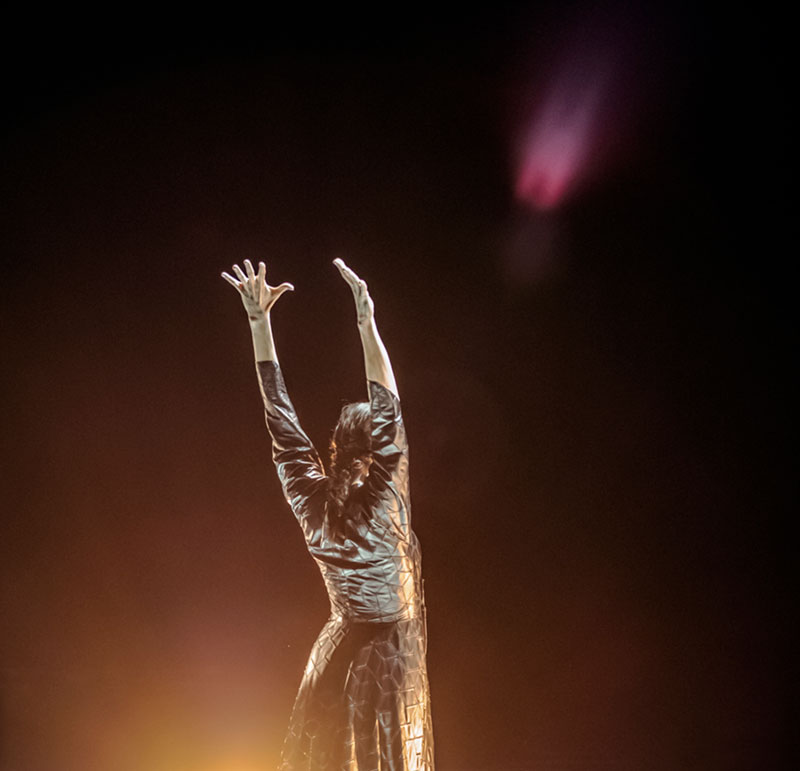
El proceso de un concierto de baile
“Creo que el flamenco goza de muy buena salud y que evoluciona naturalmente con su tiempo. El flamenco siempre es contemporáneo y tiene un lugar muy importante en el panorama musical”.
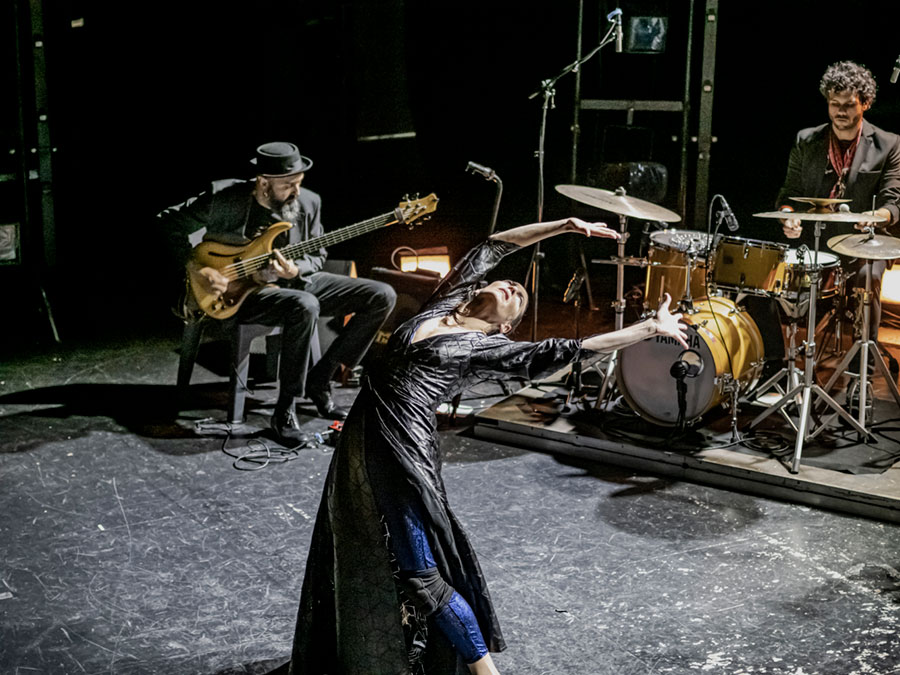
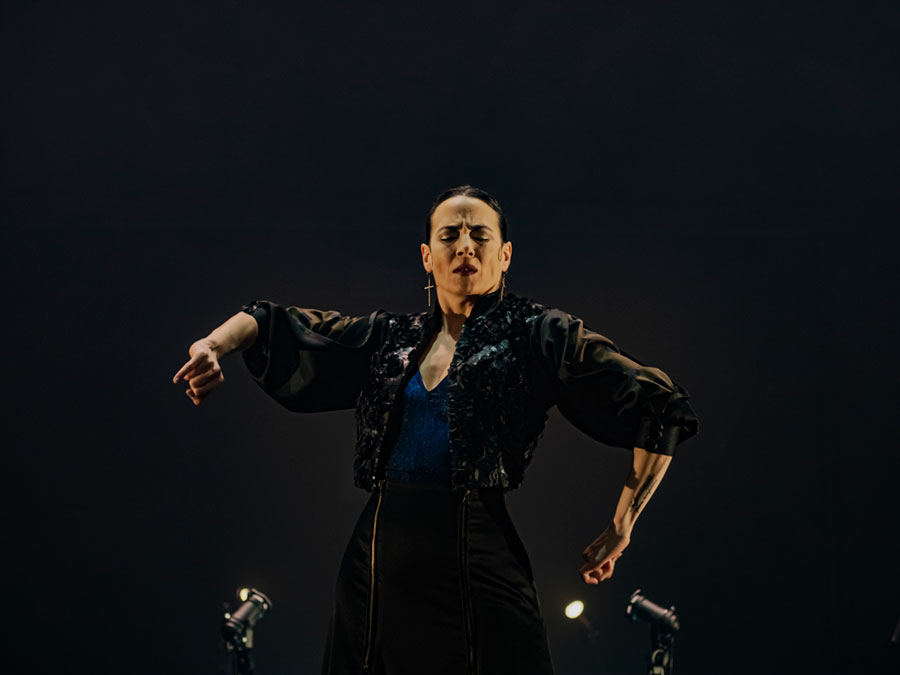
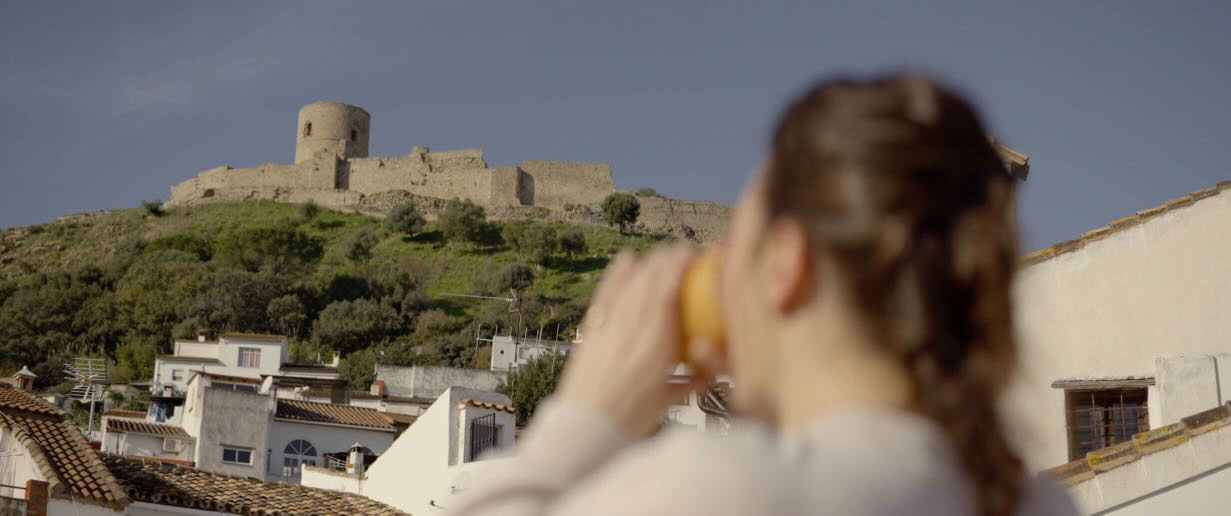
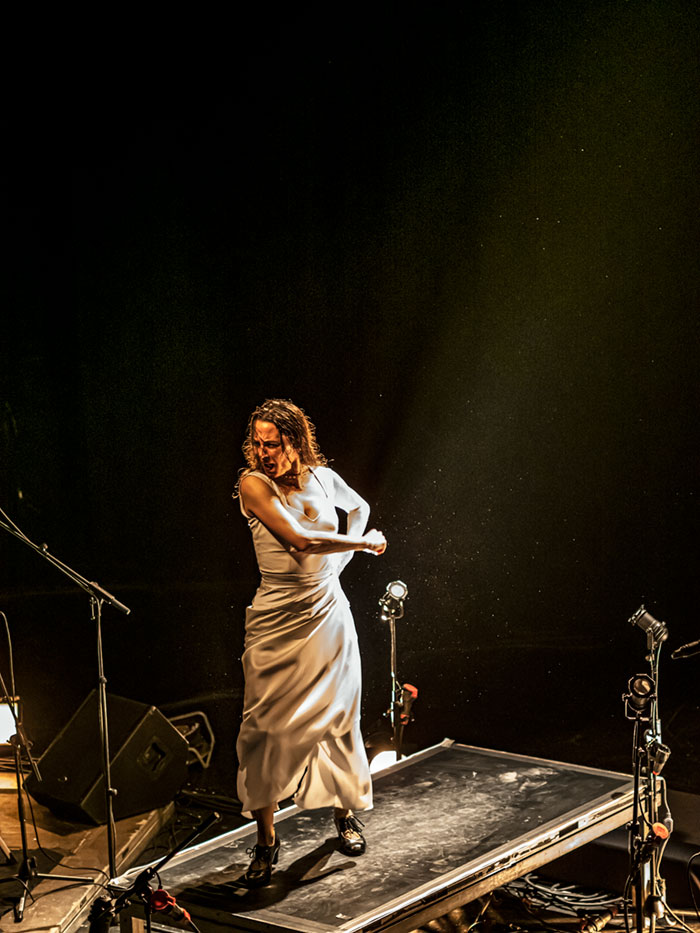
Ya llevamos varios años que le seguimos la pista a La Piñona. Su trabajo, además de tener una técnica impecable, explora tanto la tradición como la innovación, haciendo de ella una de las figuras destacadas del baile flamenco actual. El pasado mes de enero tuvimos la suerte de ver el estreno de su último espectáculo en el Festival de Flamenco de Jerez (Cádiz) “Lucía en Vivo”, un espectáculo atípico y muy flamenco en el que Lucía se reta a través de otros moldes y explora nuevos horizontes. Por fin tenemos un hueco para charlar con ella relajadamente y que nos cuenta de primera mano cómo ha sido este proceso desde su retiro en Jimena de la Frontera.
Conociendo tu trayectoria, podemos ver una conexión entre tus tres últimos espectáculos: “Abril”, “Insaciable” y “Lucía en Vivo” ¿es esto una causalidad natural o hay intencionalidad?
No hay intencionalidad, al menos conscientemente. Pienso que en cada obra hay una semilla de otra obra, así lo veo personalmente con la perspectiva del tiempo, y que todas van siendo eslabones de una cadena, no hay una sin la anterior. También creo que los artistas nos pasamos la vida buscando lo mismo, creando la misma obra.
El espectáculo se describe como un “concierto de baile” que rompe con las estructuras tradicionales del flamenco. ¿De dónde nace esta necesidad?
Tenía el deseo, por un lado, de crear en comunidad, compartir mis inquietudes e ideas con mis compañeros y que ellos también pudieran aportar, que lo hiciéramos entre todos, como los grupos de música. Por otro lado, tenía también ganas de hacer algo para pasármelo bien y que el público disfrutara sin la obligación de tener que reflexionar sobre lo que ha visto. Una especie de comunión, de algo que pasa y vives en ese momento.
Desde la primera muestra de “Lucía en Vivo” en La Aceitera, tras la residencia con ellos y pasar también por la residencia de Flamenco Fest de Torrox, hasta el estreno en Jerez, “Lucía en Vivo” ha cambiado mucho ¿cómo son estos meses en los que se moldea y se fragua una pieza de esta magnitud?
Pues en este caso, que ha sido uno de los procesos más largos de mi vida, ha habido de todo. He querido abandonar el proyecto, me he vuelto a enamorar, he vuelto a estar escéptica… Al haber parón te planteas muchas cosas, no ha sido un proyecto fácil en ese sentido porque el planteamiento del concepto desde el baile y el flamenco era un reto y no sabía si iba a llegar a lo que tenía en la cabeza.
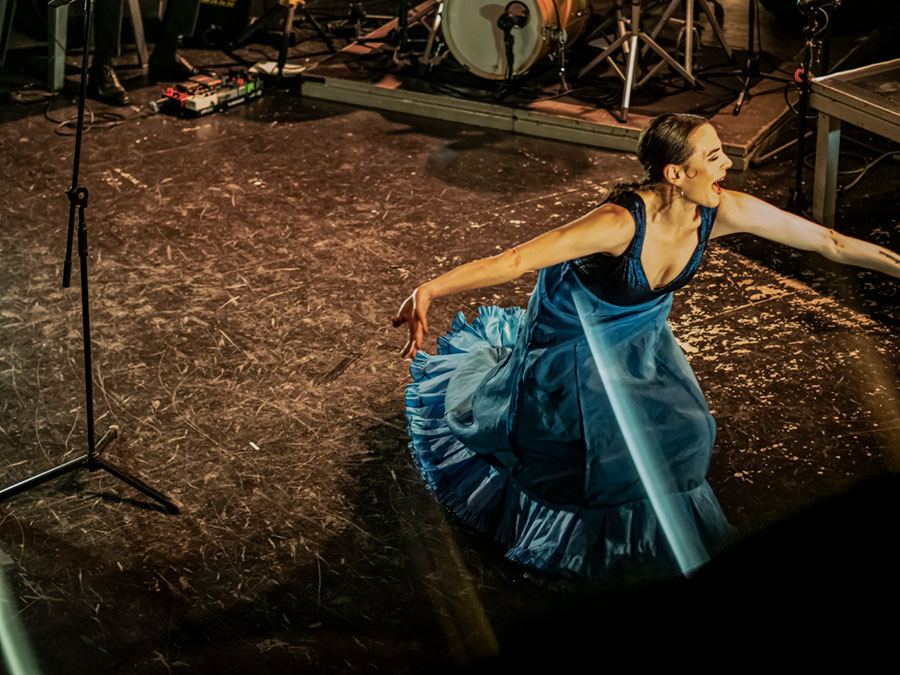
“Lucía en Vivo” se presenta como una obra dinámica, viva, que puede variar según el público, el espacio de representación e incluso tu estado emocional. ¿Has contemplado esta plasticidad para el futuro, crees que son variables que pueden jugar a tu favor a la hora de representarla?
Creo que puede jugar a mi favor porque eso me da una libertad que no tengo con otras obras, también me hace estar siempre alerta, algo que creo que es positivo porque no le das al play, si no que tienes que estar presente siempre. Pero también puede jugar en mi contra porque dependo mucho del público por ejemplo, no todos son iguales y al comunicarme con ellos de manera directa tengo que ir adivinando qué tipo de público hay ese día y qué energía hay, y con eso, sobre la marcha, jugar mis cartas. Esto me da mucho morbo, pero también vértigo. Es un arma de doble filo, pero un riesgo que me apetece mucho correr. Por otro lado, me gusta mucho la idea de que sea algo abierto y vivo y que puedo también modificar o alterar, o incluso invitar a otros artistas con los que me apetezca compartir.
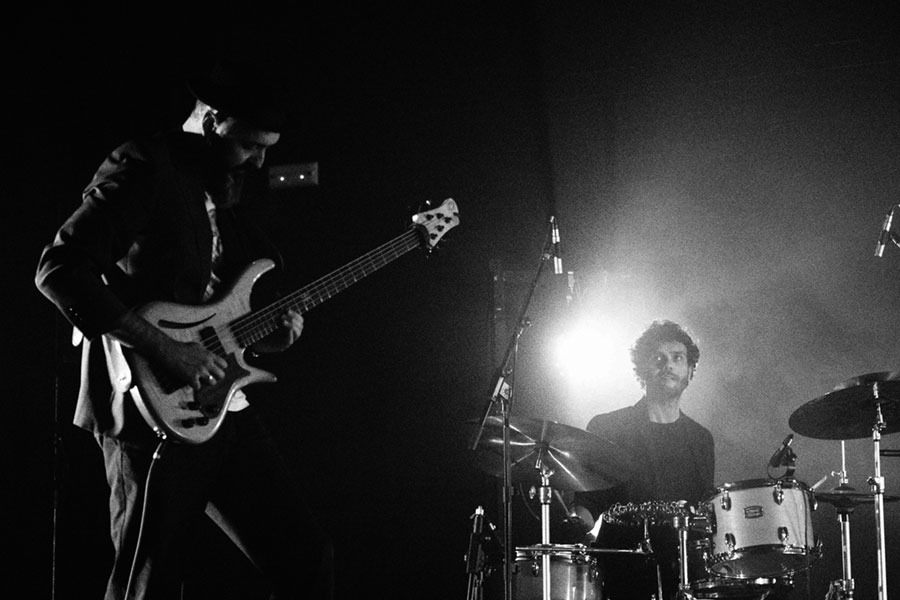
El Festival de Flamenco de Jerez es una cita clave en el mundo del flamenco. ¿Cómo influye este contexto en la preparación y presentación del espectáculo? ¿hasta qué punto influyen las posibles críticas y un escenario de esta envergadura a la hora de plantear ciertas puestas en escena?
Influye mucho. Jerez y Bienal siempre son sitios donde te sientes muy expuesta, en el punto de mira, es casi como un examen, un juicio. Para mí es imposible que no me afecte. Lo que intento es que no me condicione, ni modifique mi trabajo, porque Jerez es Jerez, pero el mundo es más ancho y no podemos crear desde un prisma tan estrecho.
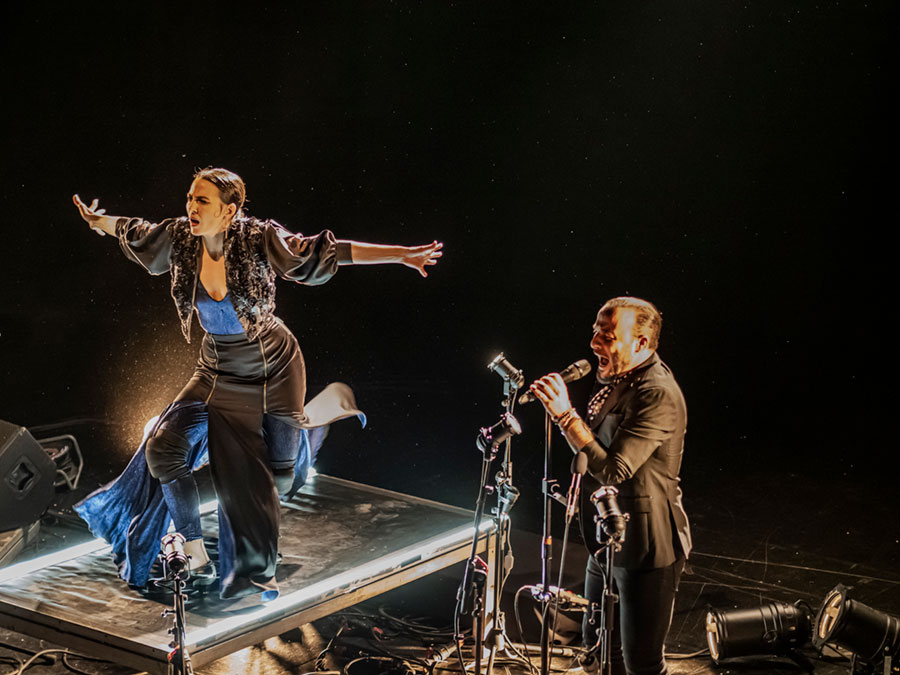
¿Cómo logras el equilibrio entre la tradición flamenca y la innovación en tu baile?
Yo creo que sale de manera natural. Nunca he intentado innovar, creo que bailo y creo acorde al mundo y tiempo en el que vivo. Inevitablemente tenemos mucha influencia de otras artes y músicas y por suerte también tenemos más libertad y nos ponemos menos límites a la hora de crear. Yo me siento bailaora y me siento flamenca por encima de todo, pero tengo muchas referencias que no son del flamenco y me las llevo a mi terreno, supongo que eso influye en el baile.
Sabemos que para esta creación, has contado con equipo de primera clase, desde la parte artística, como de la parte técnica ¿Cómo logras conjugar todo esto?
Es fundamental rodearse de un equipo de profesionales que sean competentes, comprometidos, creativos y humanos también. Se conjuga con amor y trabajo duro, con respeto y con cariño.
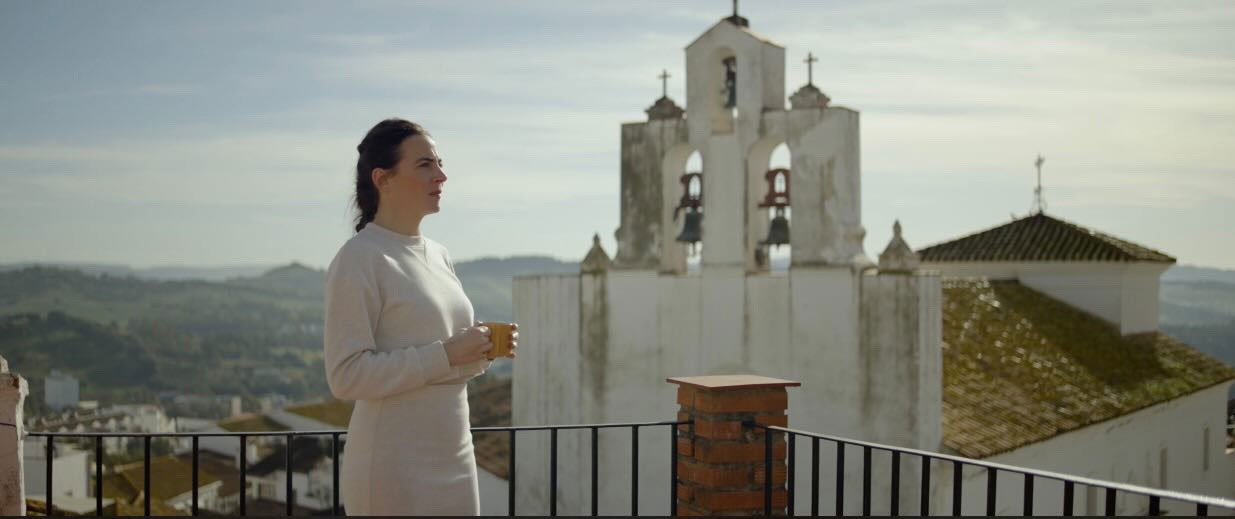
A la hora de coreografiar, ¿qué buscas primero: la emoción, la técnica o la innovación o quizás buscas otra cosa?
Primero vienen sensaciones corporales, voy teniendo experiencias cuando bailo y escucho a mi baile y movimiento, porque hay etapas en las que noto que algo está cambiando, como si algo quisiera salir, y eso es fundamental para ser honesto con lo que haces. Luego lo racionalizo, es decir, una vez que entiendo lo que está pasando, empiezo a tomar decisiones. Hay piezas que quiero que sean más técnicas, otras crearlas desde el volumen, otras desde la quietud… Luego todo eso lo tienes que hacer crecer con un sentido estético y musical dentro del contexto de la obra. Aunque en realidad no tengo una metodología concreta, cada vez es diferente, por eso es tan apasionante. A veces un vestuario u otra cosa externa también puede darte una clave para una coreografía, no siempre es tan interno, a veces también llegas a lo interno desde lo superficial.
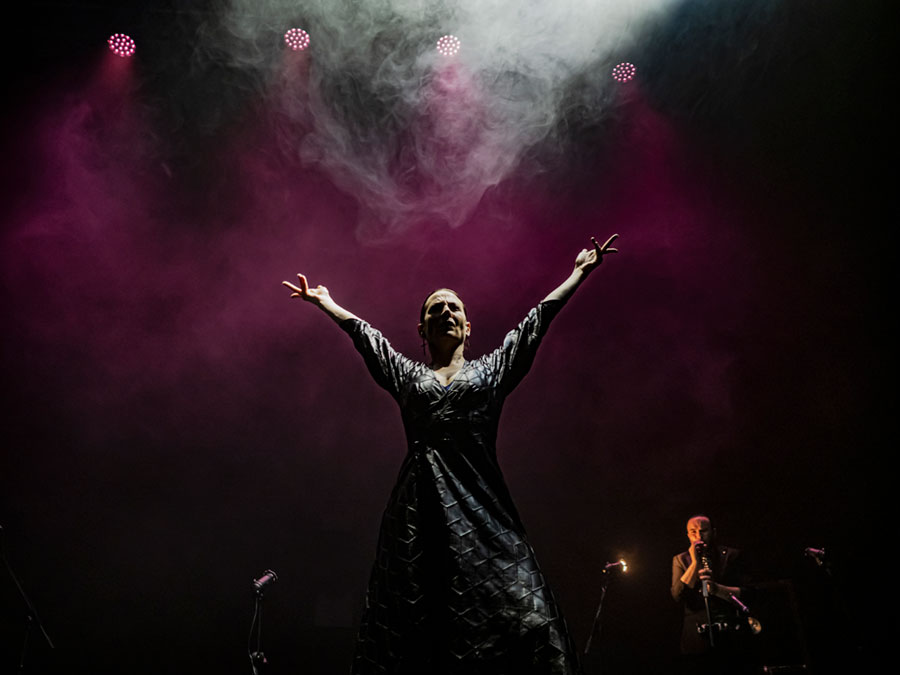
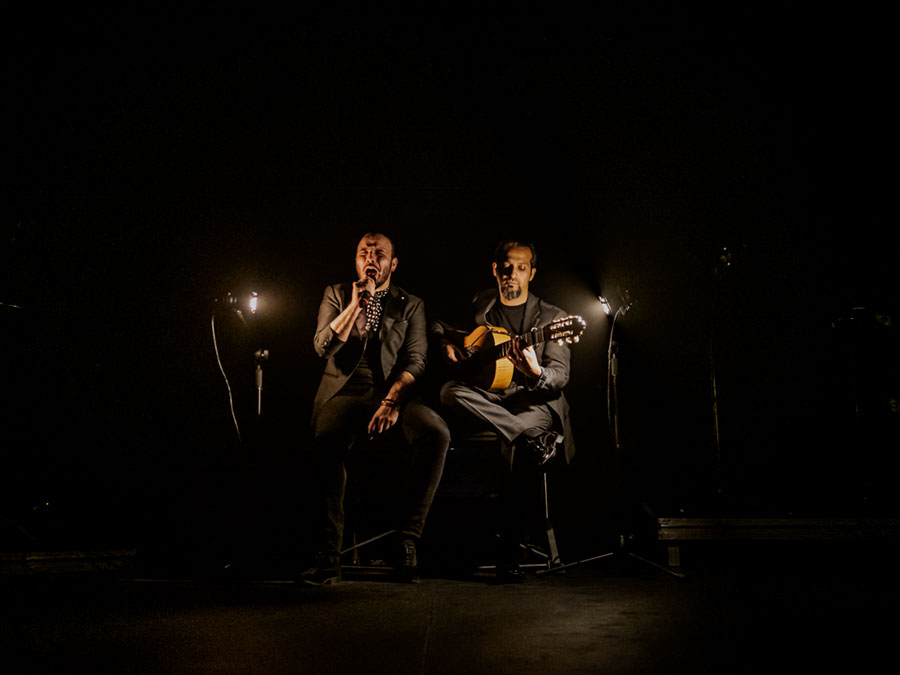
“Lucía en Vivo” se plantea como un concierto enérgico donde bailes flamencos por derecho como seguiriyas, peteneras y guajiras se funden con la música y la voz. ¿Cómo coses estos palos en este contexto de espectáculo sin que pierdan la seriedad que requieren?
Eso precisamente ha sido uno de los mayores desafíos de Lucía en Vivo, porque no quería que el contexto desenfadado le quitara jondura a mi baile y que no dejara de ser flamenco. He tenido que hacer un trabajo interno mental muy grande para ser capaz de bailar por seguiriyas y luego decir “buenas noches”.
En “Lucía en Vivo”, regalas al público una “playlist” en la que incluyes artistas tan antagónicos como Pansequito y Billie Eilish ¿Cómo conviven estos dos géneros en tu imaginario y sobre todo cómo influyen esta mezcla de estilos en tu expresión artística?
El flamenco es mi base y mi música por excelencia, pero creo que más allá del género es una forma de decir las cosas. Escucho mucha música diferente y a veces encuentro esa energía en estilos que no son flamenco. Por ejemplo, puedo encontrar un arreglo de un tema de Bille Eilish que me parece muy flamenco, y lo que hago es robarlo directamente.
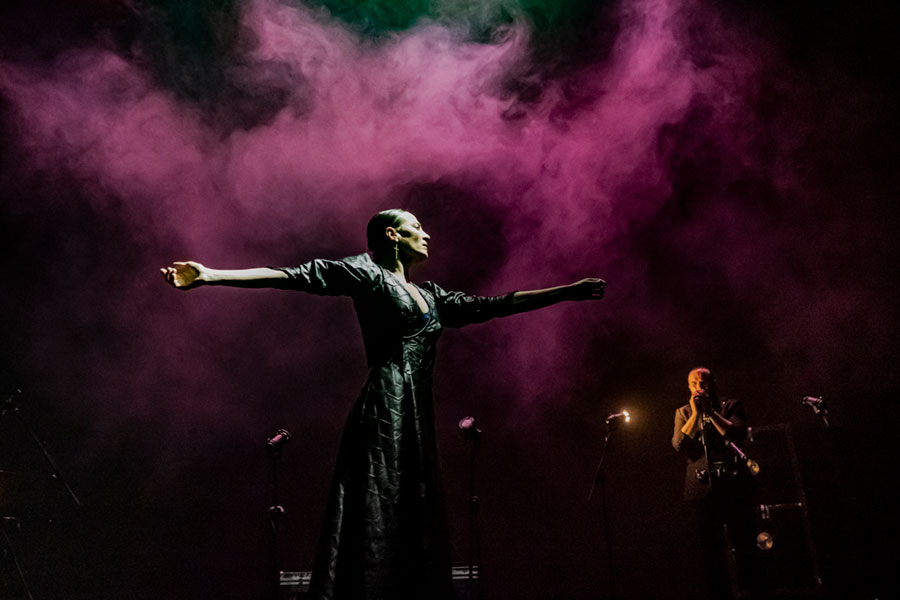
Con “Lucía en Vivo”, además del baile, exploras con otras técnicas y te lanzas a la piscina rompiendo la cuarta pared y haciendo al público cómplice en este viaje ¿cómo vives esta experiencia en un mundo en el que no es habitual este formato?
Pues ha sido todo un reto, no estoy acostumbrada a relacionarme con el público de manera tan directa a parte de mi baile. Normalmente salgo, bailo y me voy. Pero he encontrado un mundo en el que me siento muy cómoda y muy tranquila, me gusta más de lo que pensaba y creo que al público le gusta también. En cierto modo me siento más humana y cercana. ¿Por qué un músico sí puede dar las buenas noches y presentar a su banda y una bailaora, no?
Tras el éxito de “Insaciable”, que te valió el Premio Lorca a la Mejor Intérprete Femenina, te planteas seguir explorando la interpretación como arma y para ello cuentas con la dirección escénica de Alberto Velasco ¿cómo sientes que has evolucionado como artista al presentar “Lucía en Vivo”? ¿Qué aportes específicos ha brindado Alberto a “Lucía en Vivo” y cómo ha influido en la puesta en escena?
Alberto es una persona que sabe estar sin invadir, sin entorpecer ni imponer, si no que es capaz de salirse de sí mismo para entender y trabajar a tu favor. Con él he trabajado mucho esa cercanía con el público, me ha dado muchas pautas para hablar en público, para estar en el escenario desde Lucía y no desde la bailaora. Con los músicos ha trabajado en este sentido también. Y luego en la dirección escénica ha sido clave para configurar el espacio y estética, orden de repertorio y todo lo que tiene que ver con la configuración del concierto.

“Lucía en Vivo” se nutre de la energía del momento y permite mutar según diversas influencias. ¿Cómo te preparas mental y emocionalmente para mantener esta flexibilidad en cada actuación?
La clave es abandonarme a ese momento, a ese espacio y público. Tengo mis cartas para jugar y mis zonas de dominio, pero todo lo demás tengo que vivirlo en el momento presente porque no estoy haciendo un papel, estoy siendo yo misma. La preparación es no tener expectativas y fluir con la energía del momento. La no lucha. Es como una meditación. Aquí y ahora.
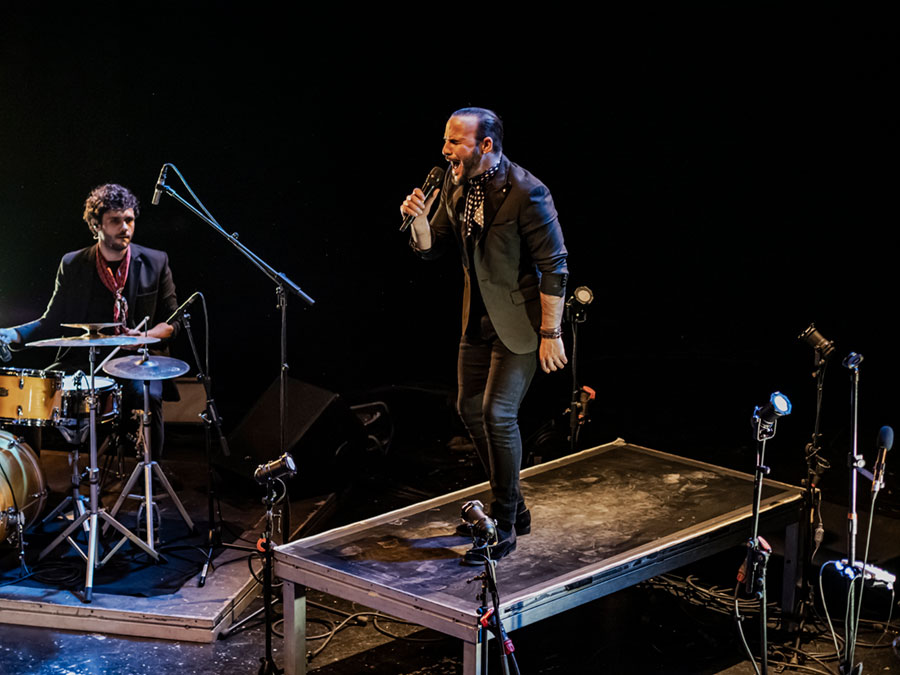
El flamenco es un arte que se mantiene vigente, esté más o menos en boga, es un arte que traspasa fronteras, sigue expandiéndose globalmente y que tiene su propia evolución interna ¿cómo ves su evolución y qué lugar crees que ocupa hoy en día?
Creo que el flamenco goza de muy buena salud y que evoluciona naturalmente con su tiempo. El flamenco siempre es contemporáneo y tiene un lugar muy importante en el panorama musical. Sí creo que hay una moda o tendencia y está más en valor no sólo como música si no también su estética, su imaginario y simbolismo, lo cual me parece bien. Solo falta que estuviera de moda que las instituciones de este país entendieran qué es, no solo el flamenco, si no el arte y la creación en sí misma.
Agradecimientos: Casa Nueva
English:
Lucía Álvarez “La Piñona”
The process of a dance concert
“I believe flamenco enjoys very good health and evolves naturally with its time. Flamenco is always contemporary and has a very important place in the musical scene.”
We have been following La Piñona’s work for several years. Her artistry, in addition to impeccable technique, explores both tradition and innovation, making her one of the most prominent figures in contemporary flamenco dance. Last January, we were fortunate to see the premiere of her latest show at the Jerez Flamenco Festival (Cádiz), “Lucía en Vivo,” an atypical and very flamenco show where Lucía challenges herself through new structures and explores new horizons. Finally, we have a moment to sit down with her and talk about this process from her retreat in Jimena de la Frontera.
Looking at your career, we can see a connection between your last three shows: “Abril,” “Insaciable,” and “Lucía en Vivo.” Is this a natural coincidence or is there intentionality behind it?
There is no intentionality, at least not consciously. I think that in each work, there is a seed from another work. Personally, I see them as links in a chain, and there is no one without the other. Also, I believe artists spend their lives searching for the same thing, creating the same work.
The show is described as a “dance concert” that breaks with traditional flamenco structures. Where does this need arise?
On the one hand, I wanted to create in community, to share my concerns and ideas with my colleagues and let them contribute as well, like music groups do. On the other hand, I also wanted to create something that was fun for me and that the audience would enjoy without the obligation to reflect on what they had seen. A sort of communion, something that happens and is lived in that moment.
From the first showcase of “Lucía en Vivo” at La Aceitera, after the residency there and also the Flamenco Fest residency in Torrox, to the premiere in Jerez, “Lucía en Vivo” has changed a lot. What are these months like when molding and shaping such a piece?
Well, in this case, which has been one of the longest processes of my life, it’s been a mix of everything. I’ve wanted to abandon the project, I’ve fallen in love again, I’ve become skeptical… Because of the break, you start questioning a lot of things, and it wasn’t an easy project in that sense because the concept from the perspective of dance and flamenco was a challenge, and I didn’t know if I’d reach what I had in my head.
“Lucía en Vivo” is presented as a dynamic, live piece that can vary depending on the audience, the performance space, and even your emotional state. Have you considered this plasticity for the future? Do you think these variables can play in your favor when performing?
I think it can play in my favor because it gives me a freedom that I don’t have with other works. It also makes me stay alert, which I think is positive because you’re not just pressing play, you always have to be present. But it can also play against me because I depend a lot on the audience, for example. Not everyone is the same, and by communicating with them directly, I have to guess what kind of audience there is that day and what energy is there, and based on that, play my cards. This gives me a lot of thrill, but also vertigo. It’s a double-edged sword, but it’s a risk I’m excited to take. On the other hand, I really like the idea that it’s something open and alive and that I can also modify or alter, or even invite other artists I want to share with.
The Jerez Flamenco Festival is a key event in the flamenco world. How does this context influence the preparation and presentation of the show? To what extent do possible reviews and such a significant stage influence the way you approach certain performances?
It influences a lot. Jerez and Bienal are always places where you feel very exposed, in the spotlight, it’s almost like an exam, a judgment. For me, it’s impossible that it doesn’t affect me. What I try to do is not let it condition me or change my work, because “Jerez is Jerez”, but the world is much bigger, and we can’t create from such a narrow perspective.
How do you strike a balance between flamenco tradition and innovation in your dance?
I think it comes out naturally. I’ve never tried to innovate; I believe I dance and create according to the world and time I live in. Inevitably, we have a lot of influence from other arts and music, and fortunately, we also have more freedom and put fewer limits on the way we create. I feel like a dancer and flamenco by nature above all else, but I have many references that are not flamenco, and I take them to my own terrain. I suppose that influences my dance.
We know that for this creation, you have had a first-class team, both in the artistic and technical aspects. How do you combine all of this?
It’s essential to surround yourself with a team of professionals who are competent, committed, creative, and human. It’s combined with love and hard work, with respect and affection.
When choreographing, what do you seek first: emotion, technique, or innovation, or perhaps something else?
First come bodily sensations. I have experiences when I dance and listen to my dance and movement, because there are stages where I notice something is changing, as if something wants to come out, and that’s fundamental for being honest with what you do. Then I rationalize it. That is, once I understand what’s happening, I start making decisions. There are pieces I want to be more technical, others to create from volume, others from stillness… Then all of that has to grow with an aesthetic and musical sense within the context of the work. Although in reality, I don’t have a concrete methodology; each time is different, and that’s what makes it so exciting. Sometimes, an outfit or something external can also give you a clue for choreography; it’s not always so internal. Sometimes you reach the internal from the superficial.
“Lucía en Vivo” is an energetic show where flamenco dances such as seguiriyas, peteneras, and guajiras merge with music and voice. How do you weave these styles into this performance context without losing the seriousness they require?
That has been one of the biggest challenges of Lucía en Vivo, because I didn’t want the laid-back context to take away the depth of my dance or make it less flamenco. I’ve had to do a lot of internal mental work to be able to dance seguiriyas and then say “good evening.”
In “Lucía en Vivo,” you give the audience a “playlist” that includes artists as opposite as Pansequito and Billie Eilish. How do these two genres coexist in your imagination, and how do they influence your artistic expression?
Flamenco is my base and my music par excellence, but I believe that beyond genre, it’s a way of saying things. I listen to a lot of different music, and sometimes I find that energy in styles that aren’t flamenco. For example, I can find an arrangement of a Billie Eilish song that feels very flamenco to me, and I simply steal it and bring it to my territory.
With “Lucía en Vivo,” in addition to dance, you explore other techniques and break the fourth wall, making the audience complicit in this journey. How do you experience this, especially in a world where this format is not common?
Well, it’s been a big challenge because I’m not used to relating to the audience in such a direct way apart from my dance. Normally, I go out, dance, and leave. But I’ve found a world in which I feel very comfortable and calm, I like it more than I thought, and I think the audience likes it too. In a way, I feel more human and approachable. Why can’t a dancer, like a musician, say good evening and introduce their band?
After the success of “Insaciable,” which earned you the Lorca Award for Best Female Performer, are you considering continuing to explore interpretation as a tool, and for that, do you count on the stage direction of Alberto Velasco? How do you feel you’ve evolved as an artist with the presentation of “Lucía en Vivo”? What specific contributions has Alberto brought to “Lucía en Vivo,” and how has he influenced the staging?
Alberto is someone who knows how to be without invading, without hindering or imposing, but who is able to step outside himself to understand and work in your favor. With him, I’ve worked a lot on that closeness with the audience, he’s given me many guidelines on how to speak to the public, how to be on stage as Lucía, not as the dancer. He’s also worked with the musicians in this sense. And then, in the scenic direction, he’s been key in configuring the space and aesthetics, the order of the repertoire, and everything related to the setup of the concert.
“Lucía en Vivo” draws energy from the moment and allows itself to mutate according to various influences. How do you prepare mentally and emotionally to maintain this flexibility in each performance?
The key is to surrender to that moment, that space, and the audience. I have my cards to play, and my areas of control, but everything else, I have to live in the present moment because I’m not playing a role, I’m being myself. The preparation is to have no expectations and flow with the energy of the moment. Not to fight it. It’s like meditation. Here and now.
Flamenco is an art that remains relevant, whether in vogue or not; it’s an art that transcends borders, keeps expanding globally, and has its own internal evolution. How do you see its evolution, and what place do you think it occupies today?
I believe flamenco enjoys very good health and evolves naturally with its time. Flamenco is always contemporary and has a very important place in the musical scene. I do think there’s a trend or fashion, and it’s more valued not just as music, but also for its aesthetics, imagery, and symbolism, which I think is good. What’s missing is for the institutions in this country to understand what it is, not just flamenco, but art and creation in general.