Bodega en movimiento: un proyecto en búsqueda constante
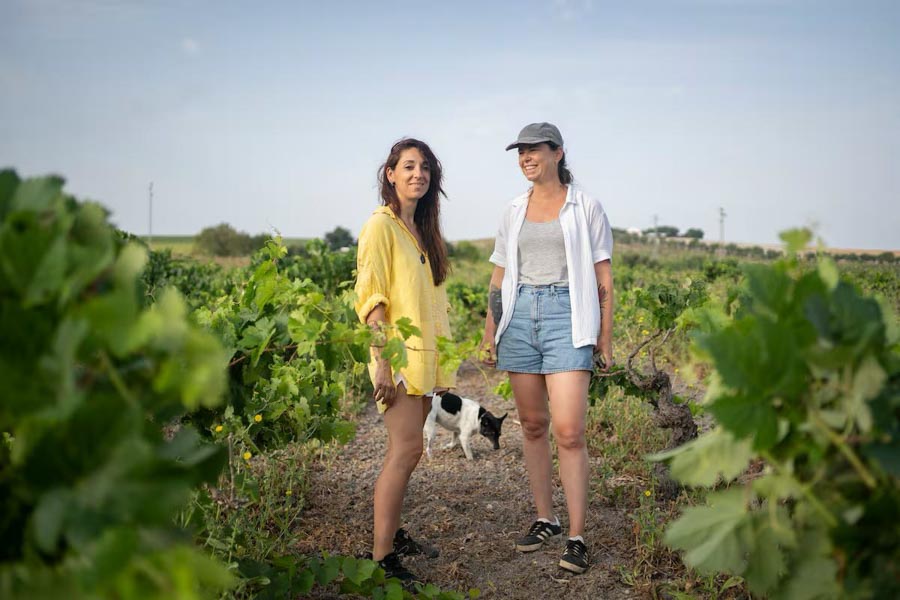
En Sanlúcar, Cádiz, donde el vino ya estaba escrito, Marta y Ana fundan “Bodega en Movimiento” un espacio sin forma fija: pocas botellas, decisiones abiertas y una manera de hacer que no termina nunca de definirse.
- english below
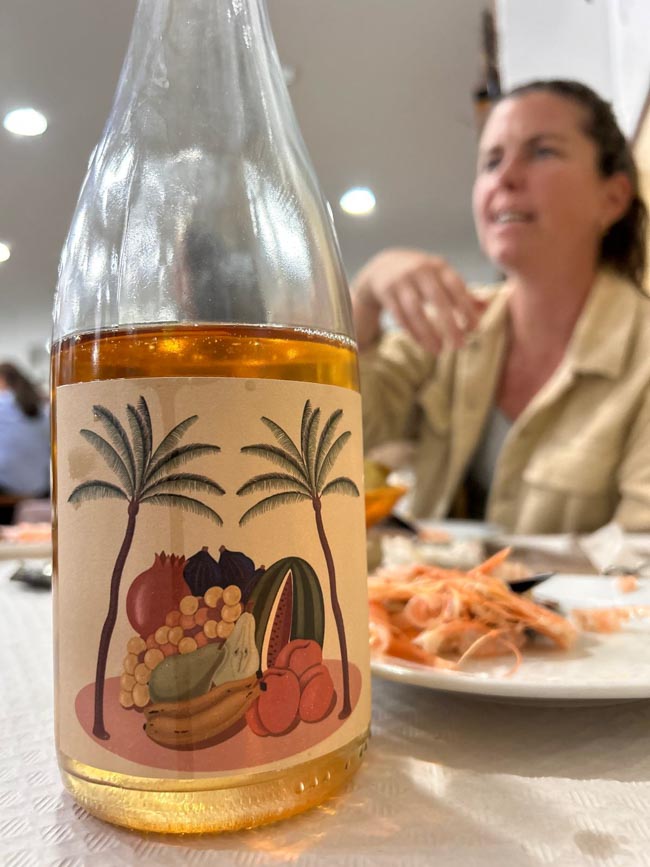
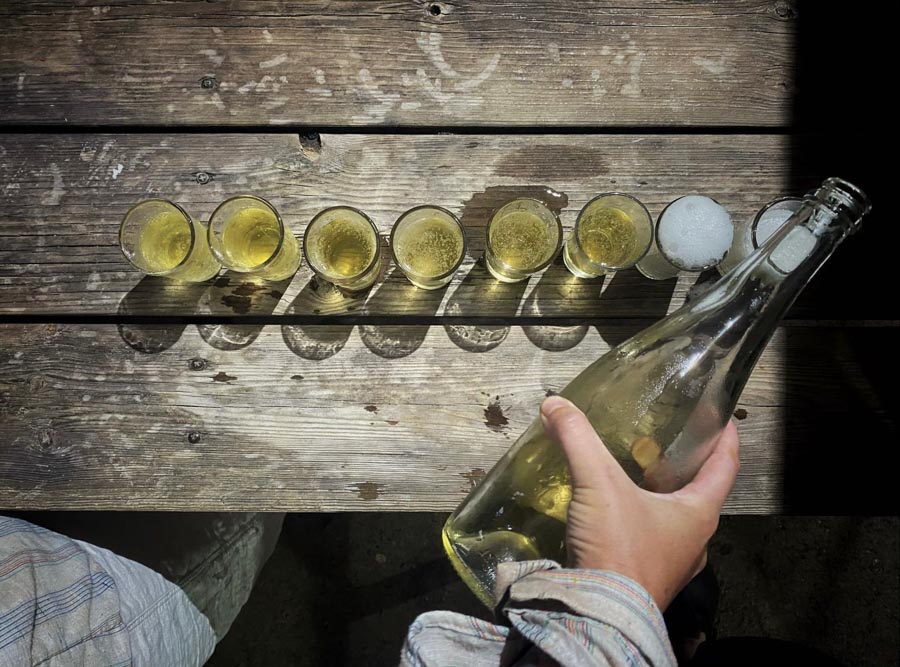
Antes de que empiece la conversación, hay algo ya ocurriendo sobre la mesa. Dos botellas abiertas que no parecen querer explicarse del todo, pero que contienen bastante de lo que vendrá después: Galán Ancestral 2025 y Honey Ancestral 2023. Mismo punto de partida —Palomino, albariza, Sanlúcar— y, sin embargo, dos velocidades distintas, dos tiempos que no coinciden. Uno más inmediato, más tenso, con la energía todavía en movimiento. El otro más reposado, con el tiempo haciendo su trabajo en silencio durante casi dos años.
No hay en ellos una búsqueda evidente de estilo o, al menos, no de un estilo que se pueda fijar. Más bien la sensación de que todo está todavía en negociación: con la viña, con el clima, con la propia materia. Fermentaciones que no se corrigen, que terminan donde pueden, en botella; degüelles que llegan cuando toca y no cuando marca el calendario. Nada parece del todo cerrado y eso, lejos de generar ruido, construye una especie de coherencia interna difícil de impostar.
“Bodega en Movimiento” suena exactamente a eso. No a marca, sino a estado; a algo que no se detiene lo suficiente como para volverse rígido. En un contexto como el de Sanlúcar, donde el vino tiene un peso histórico casi inamovible, su proyecto no entra en fricción ni busca validación: se sitúa en otro lugar, más pequeño, más cercano, más permeable. Trabajan con la misma uva que ha definido el territorio durante siglos, pero la llevan a un terreno donde el control se relaja y el proceso gana presencia.
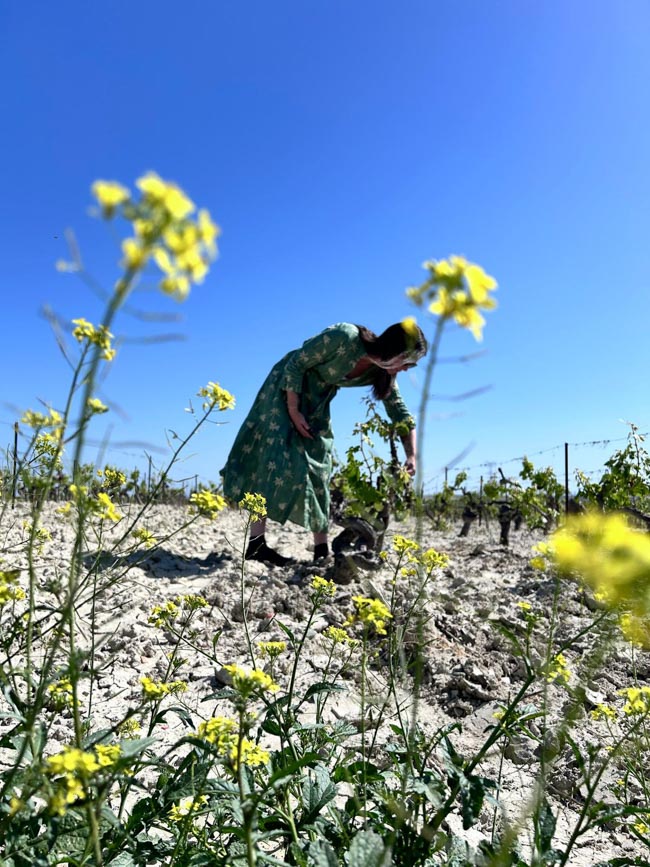
Hay también una cuestión de escala que atraviesa todo: hablamos de pocas botellas, mucho tiempo y muchas decisiones tomadas sin red. Porque, cuando no hay estructura heredada, cada paso se vuelve más visible. No hay tradición que sostenga ni discurso previo que ordenar: solo aprendizaje continuo, intuición y cierta resistencia a fijar demasiado pronto lo que todavía está cambiando. En ese sentido, el proyecto parece avanzar más como una forma de estar.
Los vinos de “Bodega en Movimiento” no buscan imponerse ni convencer de inmediato. Tienen algo más cercano a la conversación que a la declaración. Piden tiempo, pero no desde la dificultad, sino desde la vida que contienen. Hay tensión, sí, pero no como gesto, sino como consecuencia; como si lo importante no fuera tanto el resultado final como el equilibrio momentáneo al que han llegado en ese punto concreto. Quizá por eso todo aquí parece provisional en el mejor sentido de la palabra. Nada está del todo fijado, pero nada es arbitrario: cada botella funciona como una especie de captura de un año, de una decisión, de un momento dentro de algo que sigue avanzando. Y es ahí donde el nombre deja de ser una idea y se vuelve bastante literal, porque más que construir algo cerrado, lo que están haciendo es sostener un proceso abierto en el tiempo.
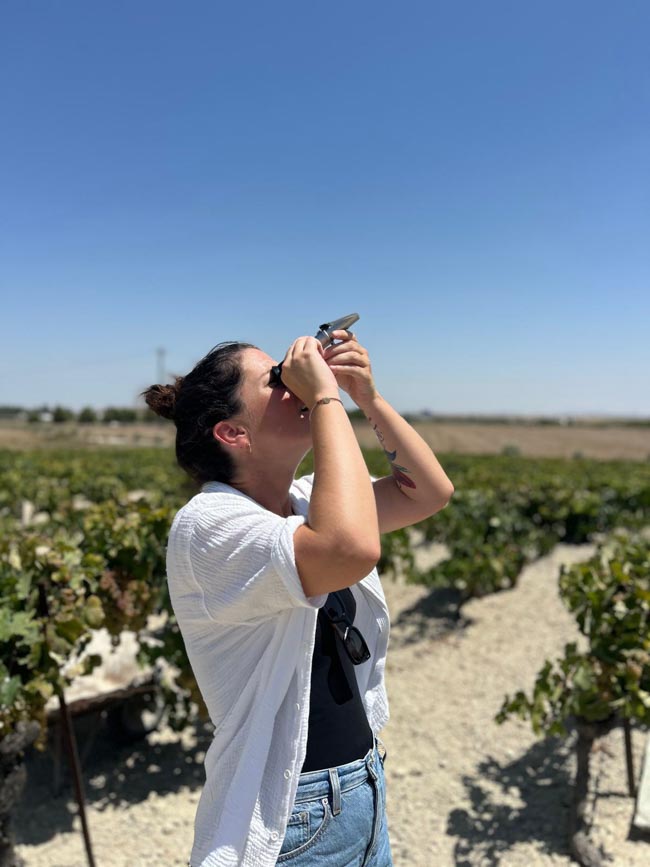
“Bodega en Movimiento” suena más a proyecto abierto que a marca. ¿En qué momento decidisteis no cerrar nunca del todo lo que estabais construyendo?
Nunca hubo un momento concreto. Empezamos haciendo vino de una forma muy intuitiva y bastante libre, y supongo que el nombre nació de ahí. Nos interesa que el proyecto pueda cambiar con nosotras, con las cosechas y con lo que vamos aprendiendo. Intentamos no construir algo rígido demasiado pronto.
No partís de una tradición familiar ni de una estructura heredada. ¿Qué te da esa libertad y qué te quita?
Nos da mucha libertad para probar, equivocarnos y hacer las cosas a nuestra manera. Pero también significa empezar desde cero en todo: aprender el oficio, encontrar viñas, herramientas, distribución, financiación… No hay una estructura detrás sosteniéndote. A veces es muy bonito y otras bastante duro.
Trabajar en Sanlúcar implica convivir con un relato muy fuerte ya escrito. ¿Cómo encuentras tu sitio sin tener que posicionarte constantemente frente a él?
No sentimos la necesidad de enfrentarnos a ese relato. Al contrario, lo admiramos muchísimo. Sanlúcar tiene una cultura del vino increíble y sería absurdo ignorarla. Simplemente intentamos trabajar desde nuestro lugar, con respeto y curiosidad, entendiendo que somos una generación distinta y que hacemos vinos diferentes, pero que claramente se acompañan y se potencian. Nos apoyamos en los grandes vinos del Marco de Jerez y nos encantaría que ellos hicieran lo mismo para que las nuevas generaciones se acercaran al Marco a través de algo más “fácil de beber”.
Más que intervenir poco, parece que elegís en qué momentos no intervenir. ¿Cómo se entrena ese tipo de intuición?
Supongo que observando mucho y teniendo paciencia y resiliencia. Cada año entendemos un poco mejor. No creemos demasiado en recetas fijas. Hay decisiones que vienen más de pasar tiempo con el vino y en la viña que de seguir una teoría concreta.
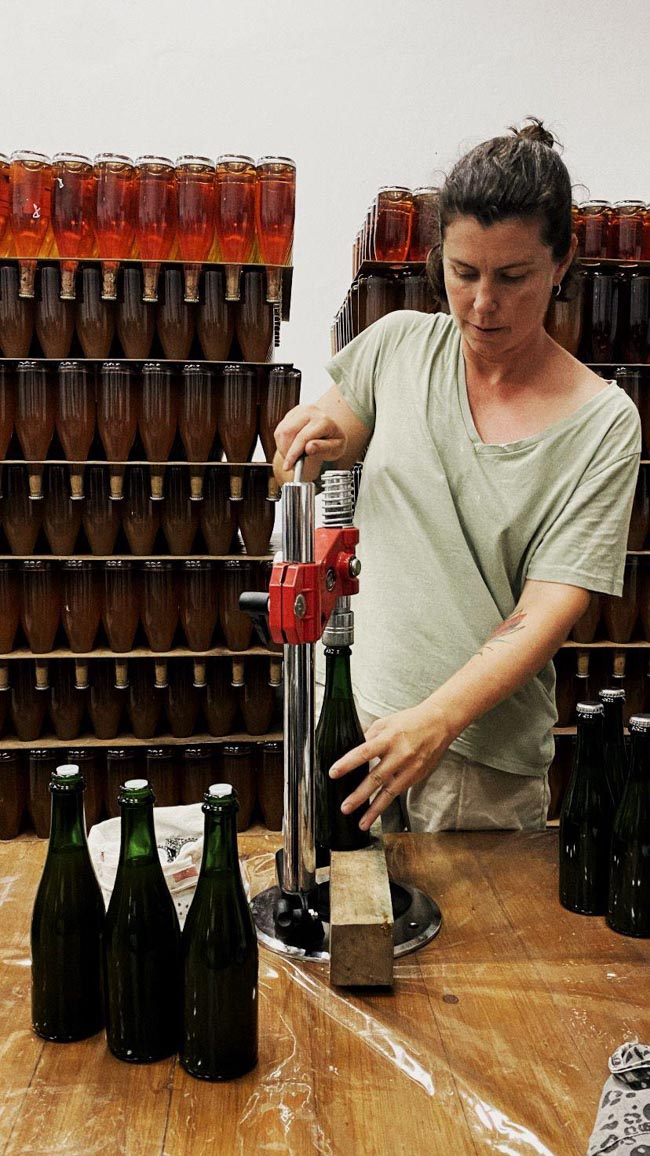
Hay algo en vuestros vinos que no busca gustar inmediatamente. ¿Os interesa que quien los pruebe tenga que hacer un esfuerzo?
No buscamos que sean difíciles; de hecho, son todo lo contrario: muy bebibles y entendibles. Ese es el feedback que recibimos de nuestro público. Queremos que tengan vida, tensión y personalidad. A veces eso hace que necesiten un poco más de tiempo o atención, pero no pensamos el vino como algo intelectual. Nos gusta que se beba con placer.
Trabajáis con tiempos que no son del todo controlables —fermentaciones que terminan en botella, degüelles que no siguen calendario—. ¿Qué relación tenéis con la incertidumbre?
Al principio generaba bastante ansiedad tanta incertidumbre, pero ya estamos entregadas a ella. Poco a poco hemos aprendido que trabajar así implica aceptar que no todo se puede controlar. Hay una parte del proceso que depende del tiempo, del clima y del propio vino. Intentamos acompañarlo más que imponerle un ritmo.
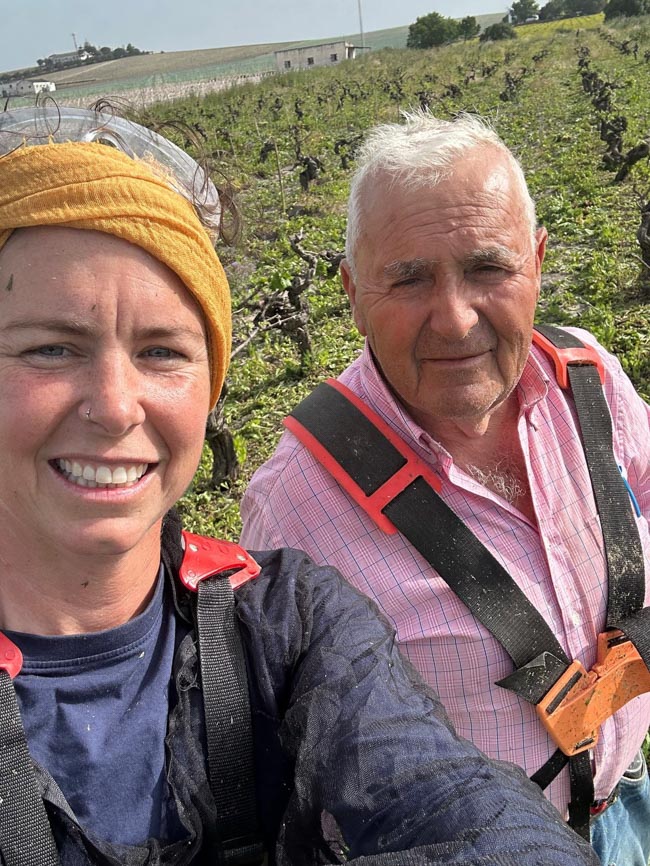
En proyectos pequeños, cada botella casi tiene peso individual. ¿Eso os hace más conscientes o más libres a la hora de decidir?
Las dos cosas. Hay mucha responsabilidad porque cada decisión se nota enseguida, pero también hay libertad porque trabajamos en escalas muy pequeñas y podemos cambiar cosas rápidamente si sentimos que tienen sentido.
La elección de herramientas como la prensa de madera o la vendimia manual no parece solo técnica. ¿Hay también una forma de posicionarse detrás de esas decisiones?
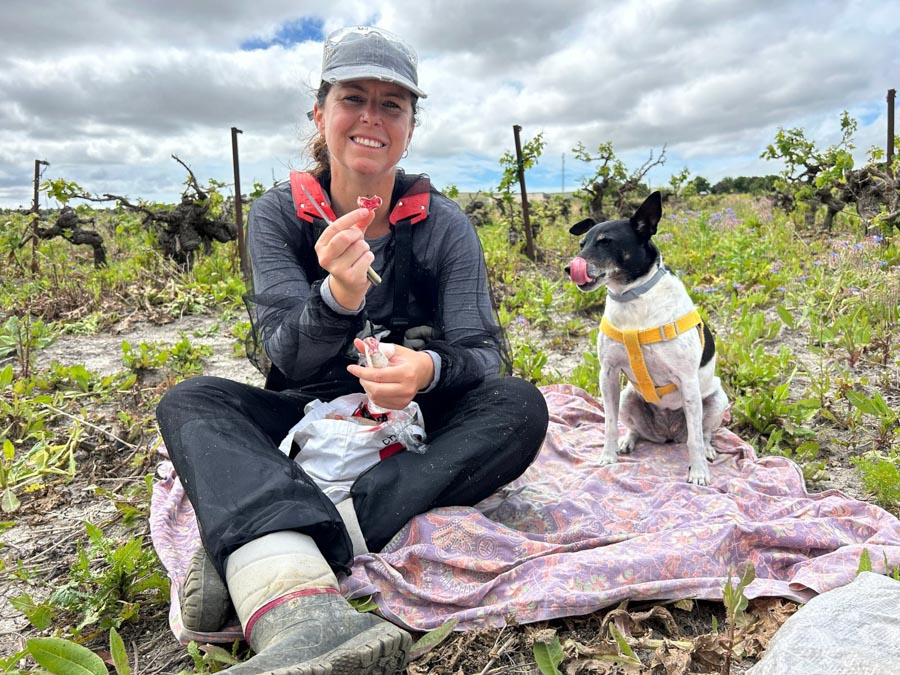
Sobre todo buscamos una forma de trabajo más cercana y más lenta. Son herramientas que nos permiten estar más presentes en el proceso y tratar la uva de una manera muy delicada. No lo vivimos como una postura romántica, sino como algo práctico y coherente con la forma en la que trabajamos.
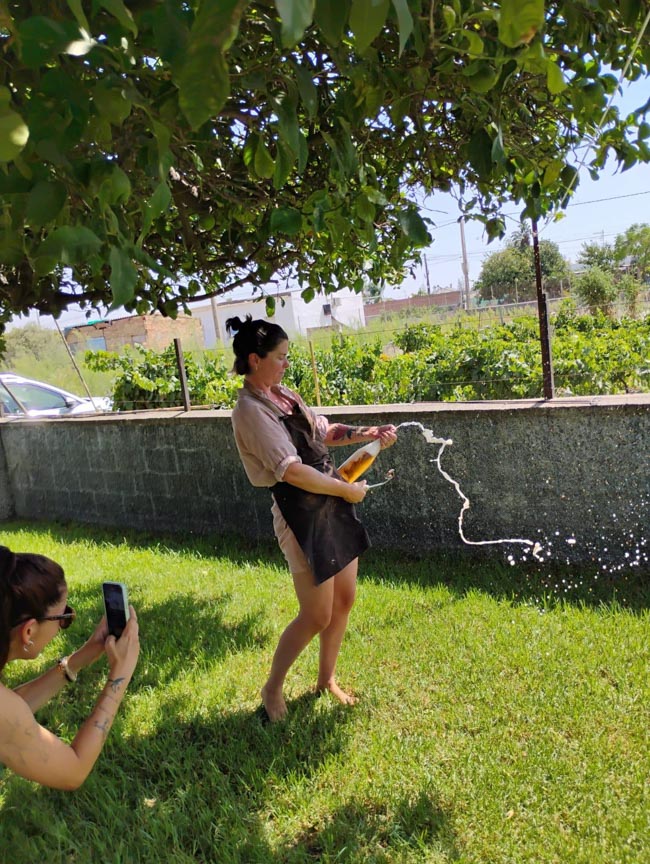
Usáis una uva como la Palomino, históricamente muy codificada. ¿Os interesa dialogar con ese pasado o simplemente trabajar al margen de él?
Es imposible trabajar con Palomino aquí sin dialogar con todo lo que existe alrededor. Esa historia está muy presente. Pero también nos interesa descubrir otras posibilidades de la variedad, como los ancestrales y la increíble versatilidad de la uva dependiendo del pago en el que se encuentre y la composición del suelo de esa parcela en concreto. Piensa que utilizamos la misma uva y el mismo proceso de elaboración en la misma región y hacemos vinos completamente diferentes estando a unos pocos km de distancia.
La burbuja en vuestros vinos no parece pensada para celebrar, sino para tensar. ¿Qué os permite el ancestral que no encontráis en otros formatos?
Nos gusta mucho la energía que aporta la burbuja y, principalmente, están pensados para celebrar. El ancestral puede dar vinos muy vivos, muy cambiantes y con bastante textura. Creemos que esa tensión viene más del terroir que de la burbuja en sí.
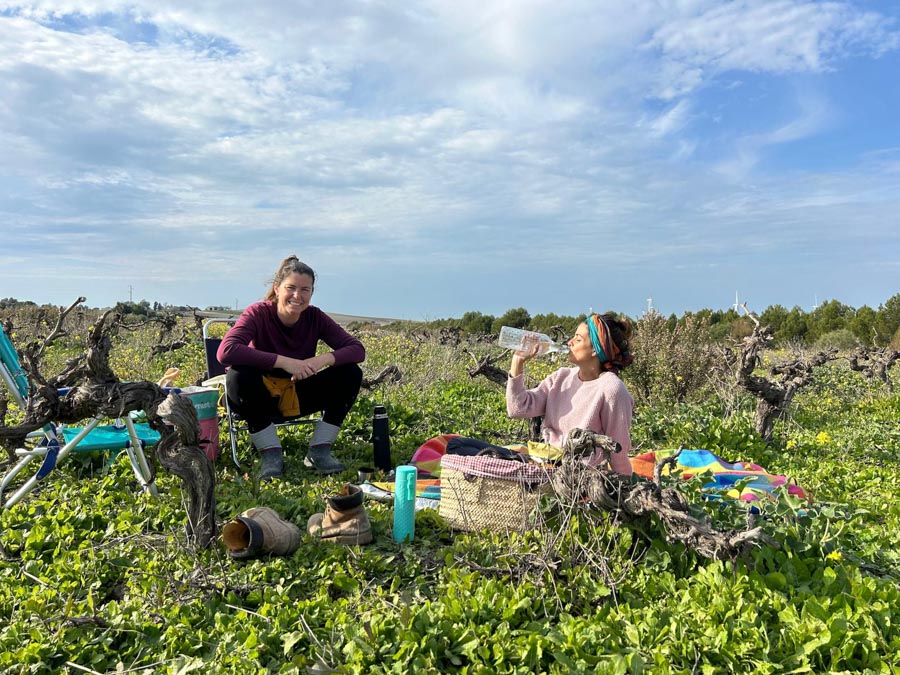
Hay una línea muy fina entre trabajar desde fuera del sistema y acabar siendo absorbido por él. ¿Dónde sentís que estáis ahora mismo?
No pensamos demasiado en esos términos. Intentamos centrarnos en hacer vinos honestos y en poder sostener el proyecto en el tiempo. Al final, todos formamos parte de algún sistema. Lo importante para nosotras es no perder el sentido de por qué empezamos.
El discurso del vino natural muchas veces se convierte en una estética repetida. ¿Cómo evitáis que vuestro trabajo entre en ese lenguaje prefabricado?
Intentando dedicar más tiempo a trabajar que a construir discurso. Nos interesa mucho el vino y la agricultura, pero no sentimos necesidad de encajar dentro de una etiqueta concreta.
Más allá del vino, hay una economía detrás: pocas botellas, mucho trabajo, poco margen. ¿Cómo se sostiene realmente un proyecto así?
Con muchísimo trabajo y bastante incertidumbre. La parte romántica existe, pero también hay una realidad económica complicada detrás de proyectos tan pequeños. Intentamos crecer despacio y de forma sostenible y orgánica, sin perder el control de lo que hacemos. Pero no os negaremos que los comienzos están siendo complejos.
En vuestro caso, el vino parece más una consecuencia que un objetivo. ¿Qué es lo que realmente estáis construyendo?
Probablemente, una forma de vida. Un proyecto que nos permita trabajar cerca de la naturaleza, aprender constantemente y compartir algo que sentimos muy nuestro.
Si alguien se acerca a vuestros vinos sin contexto, sin saber nada, ¿qué os gustaría que percibiera primero: una idea, una energía o una forma de estar?
Quizá honestidad. Que hay personas detrás haciendo las cosas con cuidado, intentando que el vino tenga algo de lugar, de tiempo y de vida.
ENGLISH
Bodega en Movimiento: A Project in Constant Search
In Sanlúcar, Cádiz, where wine already had its story written, Marta and Ana founded Bodega en Movimiento: a space without a fixed shape, built around small quantities, open decisions, and a way of working that never quite finishes defining itself.
Before the conversation begins, something is already happening on the table. Two open bottles that do not seem entirely willing to explain themselves, but that contain much of what will come later: Galán Ancestral 2025 and Honey Ancestral 2023. The same starting point —Palomino, albariza, Sanlúcar— and yet two different speeds, two times that do not quite coincide. One more immediate, more tense, with its energy still in motion. The other more settled, with time doing its work quietly for almost two years.
There is no obvious search for style in them, or at least not for a style that can be fixed. Rather, there is the feeling that everything is still being negotiated: with the vineyard, with the climate, with the material itself. Fermentations that are not corrected, that finish where they can, in the bottle; disgorgements that arrive when they must, not when the calendar says so. Nothing seems entirely closed, and that, far from creating noise, builds a kind of internal coherence that is difficult to fake.
Bodega en Movimiento sounds exactly like that. Not like a brand, but like a state; something that does not stop long enough to become rigid. In a context like Sanlúcar, where wine carries an almost immovable historical weight, their project does not enter into conflict or seek validation. It places itself somewhere else: smaller, closer, more permeable. They work with the same grape that has defined the territory for centuries, but they take it into a place where control loosens and process gains presence.
There is also a question of scale running through everything: few bottles, a lot of time, and many decisions made without a safety net. Because when there is no inherited structure, every step becomes more visible. There is no tradition holding things up, no pre-existing discourse to organise: only continuous learning, intuition, and a certain resistance to defining too soon what is still changing. In that sense, the project seems to move forward more as a way of being.
The wines of Bodega en Movimiento do not seek to impose themselves or convince immediately. They have something closer to conversation than declaration. They ask for time, but not from difficulty; rather from the life they contain. There is tension, yes, but not as a gesture — as a consequence. As if what mattered were not so much the final result as the temporary balance they have reached at that precise point.
Perhaps that is why everything here seems provisional in the best sense of the word. Nothing is completely fixed, but nothing is arbitrary either: each bottle works as a kind of capture of a year, a decision, a moment within something that continues to move forward. And it is there that the name stops being an idea and becomes quite literal, because more than building something closed, what they are doing is sustaining an open process over time.
Bodega en Movimiento sounds more like an open project than a brand. At what point did you decide not to fully close what you were building?
There was never a specific moment. We started making wine in a very intuitive and quite free way, and I suppose the name came from there. We are interested in the project being able to change with us, with the harvests, and with what we keep learning. We try not to build something too rigid too soon.
You do not come from a family tradition or an inherited structure. What does that freedom give you, and what does it take away?
It gives us a lot of freedom to try things, make mistakes, and do things in our own way. But it also means starting from scratch in everything: learning the craft, finding vineyards, tools, distribution, financing… There is no structure behind you holding you up. Sometimes it is very beautiful, and other times it is quite hard.
Working in Sanlúcar means living alongside a very strong story that has already been written. How do you find your place without constantly having to position yourselves against it?
We do not feel the need to confront that story. Quite the opposite: we admire it enormously. Sanlúcar has an incredible wine culture, and it would be absurd to ignore it. We simply try to work from our own place, with respect and curiosity, understanding that we are a different generation and that we make different wines, but that they clearly accompany and strengthen each other. We rely on the great wines of the Marco de Jerez, and we would love for them to do the same so that new generations can approach the Marco through something more “easy to drink”.
More than intervening little, it seems that you choose the moments when not to intervene. How do you train that kind of intuition?
I suppose by observing a lot and having patience and resilience. Every year we understand a little more. We do not really believe in fixed recipes. Some decisions come more from spending time with the wine and in the vineyard than from following a specific theory.
There is something in your wines that does not seem to seek immediate approval. Are you interested in the person tasting them having to make an effort?
We do not want them to be difficult; in fact, they are quite the opposite: very drinkable and understandable. That is the feedback we get from our audience. We want them to have life, tension, and personality. Sometimes that means they need a little more time or attention, but we do not think of wine as something intellectual. We like it to be drunk with pleasure.
You work with times that are not entirely controllable — fermentations that finish in bottle, disgorgements that do not follow a calendar. What is your relationship with uncertainty?
At the beginning, so much uncertainty created quite a lot of anxiety, but now we have surrendered to it. Little by little, we have learned that working this way means accepting that not everything can be controlled. There is a part of the process that depends on time, climate, and the wine itself. We try to accompany it rather than impose a rhythm on it.
In small projects, each bottle almost carries individual weight. Does that make you more conscious or freer when making decisions?
Both. There is a lot of responsibility because every decision is noticeable straight away, but there is also freedom because we work on very small scales and can change things quickly if we feel they make sense.
The choice of tools such as a wooden press or hand harvesting does not seem merely technical. Is there also a way of positioning yourselves behind those decisions?
Above all, we are looking for a closer and slower way of working. They are tools that allow us to be more present in the process and to treat the grapes in a very delicate way. We do not experience it as a romantic position, but as something practical and coherent with the way we work.
You use a grape like Palomino, which is historically very codified. Are you interested in dialoguing with that past, or simply working outside it?
It is impossible to work with Palomino here without dialoguing with everything that exists around it. That history is very present. But we are also interested in discovering other possibilities within the variety, such as ancestral sparkling wines and the incredible versatility of the grape depending on the pago where it is found and the composition of that specific parcel’s soil. Think that we use the same grape and the same winemaking process in the same region, and yet we make completely different wines just a few kilometres apart.
The bubbles in your wines do not seem designed to celebrate, but to create tension. What does the ancestral method allow you to do that you do not find in other formats?
We really like the energy that the bubble brings and, mainly, they are designed to celebrate. Ancestral wines can be very alive, very changeable, and quite textured. We believe that tension comes more from the terroir than from the bubble itself.
There is a very fine line between working outside the system and eventually being absorbed by it. Where do you feel you are right now?
We do not think too much in those terms. We try to focus on making honest wines and on being able to sustain the project over time. In the end, we are all part of some system. What matters to us is not losing the sense of why we started.
The discourse around natural wine often becomes a repeated aesthetic. How do you avoid your work entering that prefabricated language?
By trying to spend more time working than building discourse. We are very interested in wine and agriculture, but we do not feel the need to fit within a specific label.
Beyond the wine, there is an economy behind it: few bottles, a lot of work, little margin. How can a project like this really be sustained?
With a huge amount of work and quite a lot of uncertainty. The romantic side exists, but there is also a complicated economic reality behind projects this small. We try to grow slowly and in a sustainable, organic way, without losing control of what we do. But we will not deny that the beginning has been complex.
In your case, wine seems more like a consequence than an objective. What are you really building?
Probably a way of life. A project that allows us to work close to nature, to keep learning constantly, and to share something that feels very much our own.
If someone approaches your wines without context, without knowing anything, what would you like them to perceive first: an idea, an energy, or a way of being?
Perhaps honesty. That there are people behind it doing things with care, trying to make wine that contains something of place, time, and life.