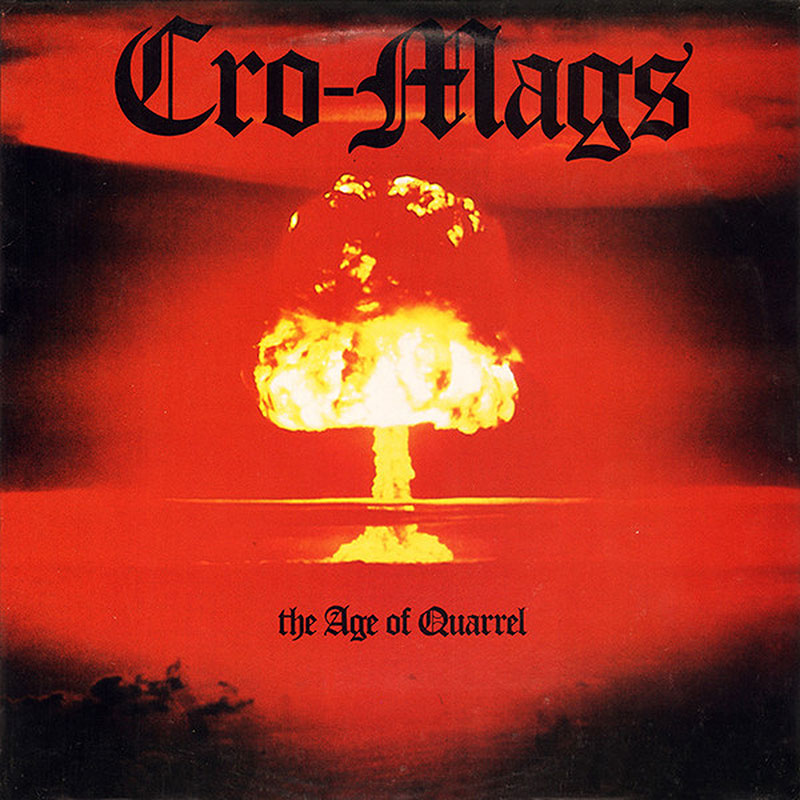
Harley Flanagan, candid about childhood, archives, and how to keep moving forward.
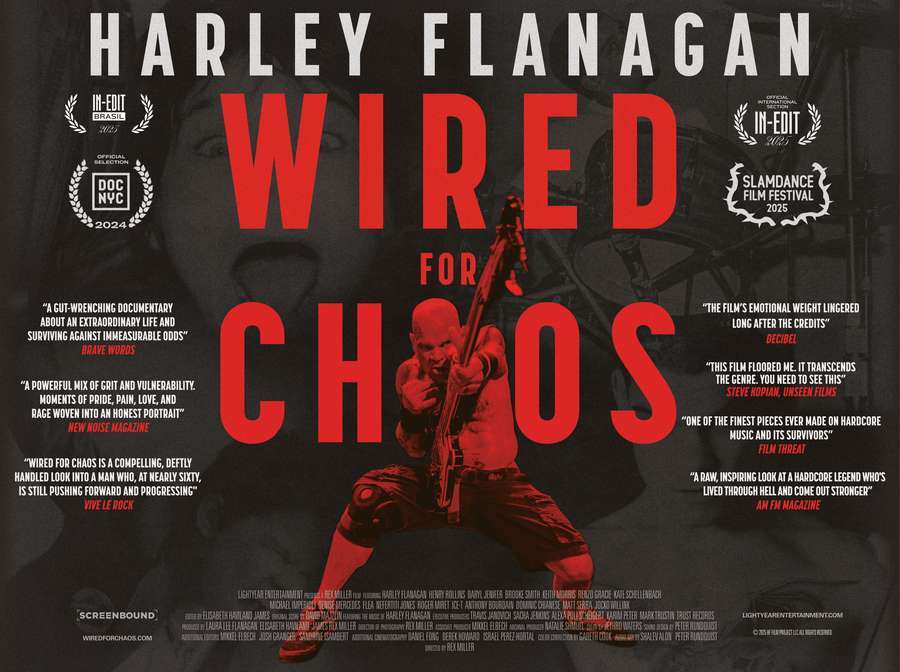
I grew up on Cro-Mags—back when you had to hunt for stories in magazines and fanzines, long before social media turned everything into content. Watching Harley Flanagan: Wired for Chaos felt like reading the book all over again: once it starts, it doesn’t let go.
For people who’ve followed Harley Flanagan for years, the headline isn’t news—your life has always sounded larger than life. What the film does is strip the myth down to the cost: the early damage, the anger, the survival, and the discipline it takes to keep going. Built from an exhaustive process—over 100 hours of interviews and a vast archive shaped into a single narrative by Rex Miller—it’s not just a documentary, it’s a ledger.
This conversation isn’t about nostalgia. It’s about what you remember, what you refuse to revisit, what changed, what didn’t—and why the story is still moving.
Are you completely satisfied with the result?
I think they did a good job, it’s really hard to fit over 50 years into an hour and change, especially when you have had a life like mine. I’m already onto the next phase and chapter of my life. So the story is still being told but again, I think they did a good job.
Tell us a little about the process. How and when did the idea come about? My feeling is that it is a kind of continuation or expansion of the book, but much more introspective and personal. I suppose that also, being a different format, the result makes it feel that way. Although I also imagine it’s because it’s harder and more difficult to verbalize certain things, situations from your childhood, feelings, etc., especially in front of a camera. Do you remember which moments or things were hardest for you to talk about? In that sense, do you regret anything you’ve shared, or do you think you’ve left things unsaid
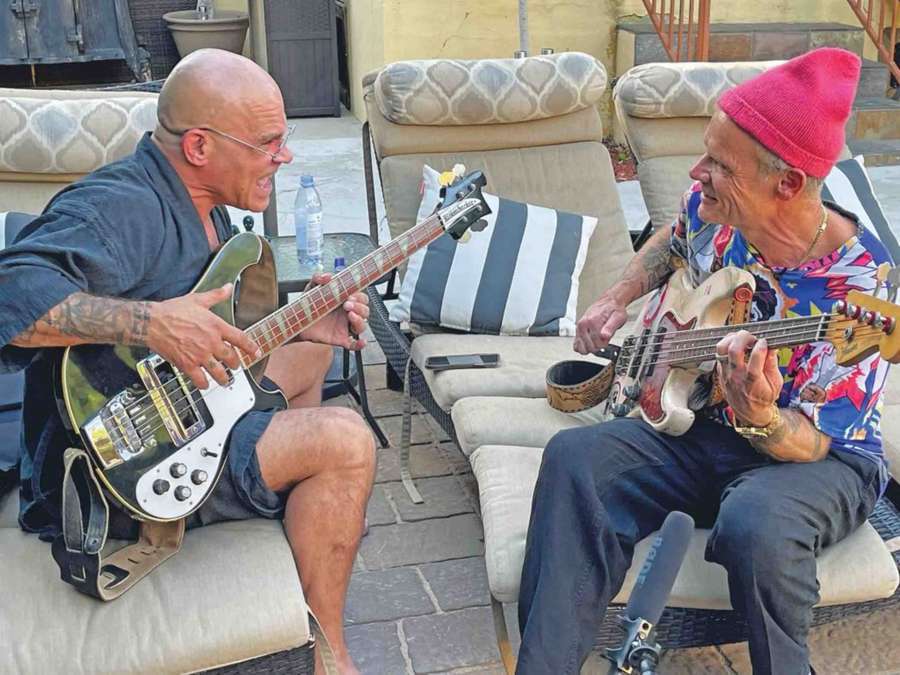
I had little to do with the process, it was not even my idea. My wife who edited the book was the one who got it in her head that it should be a film. She was one of the producers. One thing led to the next, we eventually hooked up with director Rex Miller. It was a long process, over 100 hours of interviews, many of which didn’t even make the film. Over 600 pieces of archive footage and stills. I didn’t even see it till it was done. I was only present for my interviews and a couple times that I walked in during others, which turned into conversations, parts of which ended up in the film.
f: Jonah Odin Flanagan
In Wired For Chaos, I took away a message of hope—keep moving forward and try to leave your demons behind. Did I get that right?
I don’t remember, I wrote the book, I never looked back. I never even read it. I mean, it would be terrible if I was still in the same place. As far as what you got out of the film, I think you got the message.
Apart from your wife and family, have you sought professional help to overcome certain things from your past that were too heavy? Do you think talking about this is still taboo nowadays?
Yes I did. Still taboo? i don’t care. Not my problem. No matter what the subject is, if you want good advice, then you go to someone who has knowledge on the subject and good credentials.
f: Jonah Odin Flanagan
The amount of amazing graphic material that appears in the documentary is incredible. Approximately what percentage of that material comes from your personal archive?
I had a lot, but not all. We had great archivists who found a lot of amazing footage, I had never seen, and didn’t know existed.
Looking back, do you think your impact on punk—and music in general—would have been the same if you hadn’t lived all that so young?
I doubt it, but who knows.
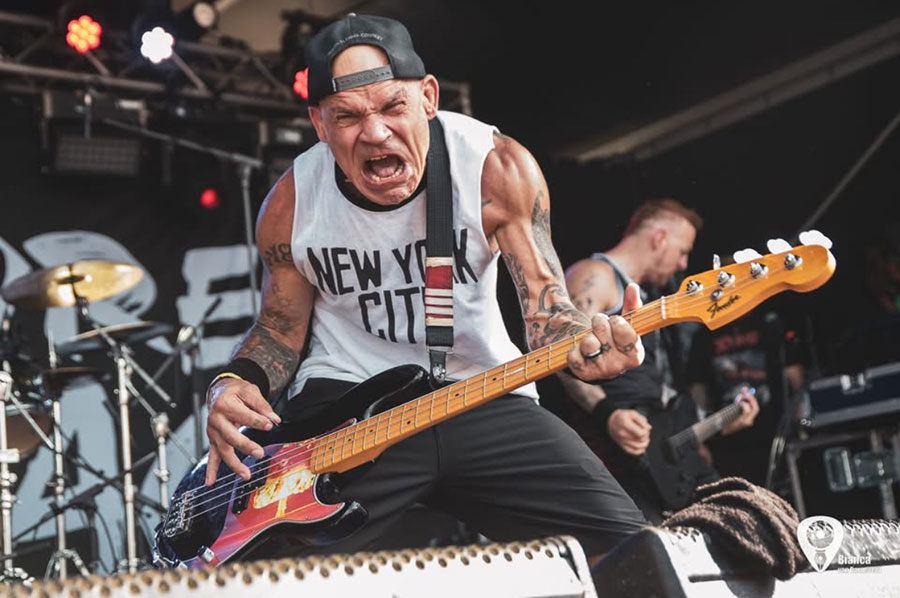
During the documentary, we see you exercising in some scenes. From what you say, sports, particularly jiu-jitsu, marked a turning point at a certain moment and continue to be an important part of your life, both physically and mentally. How does your neck handle those intense tours you’ve been immersed in lately? Do you do any kind of warm-up beforehand and stretching afterward, or do you follow any special routine to cope better?
I exercise everyday. I still train a lot of Jiu-Jitsu, Box, a little Muay Thai. I like to stay active and in shape, I’ve got some injuries, but that is life. I have routines for tour, for pre show, for home, for maintenance and sometimes I go extra and really push myself just because I like to.
f: Bianca Van Barneveld
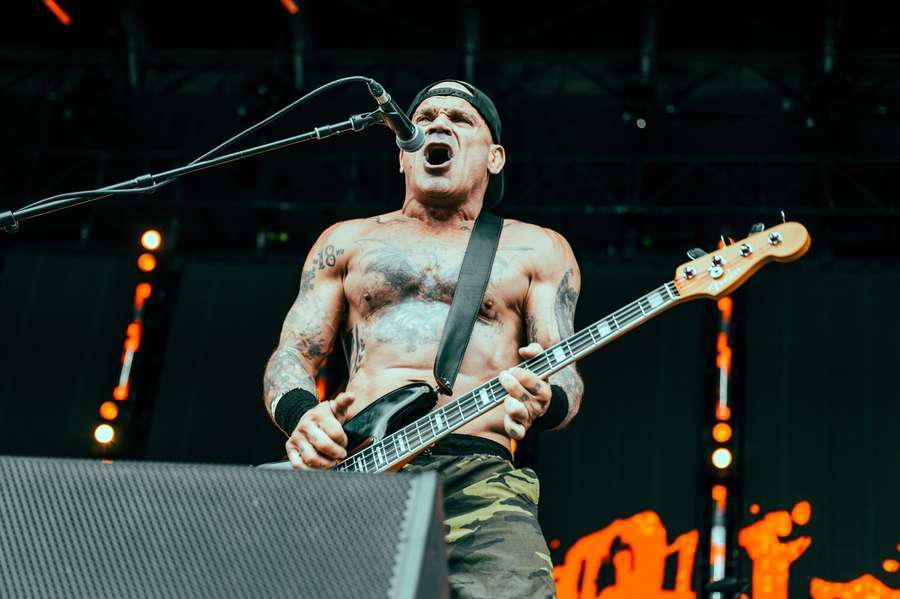
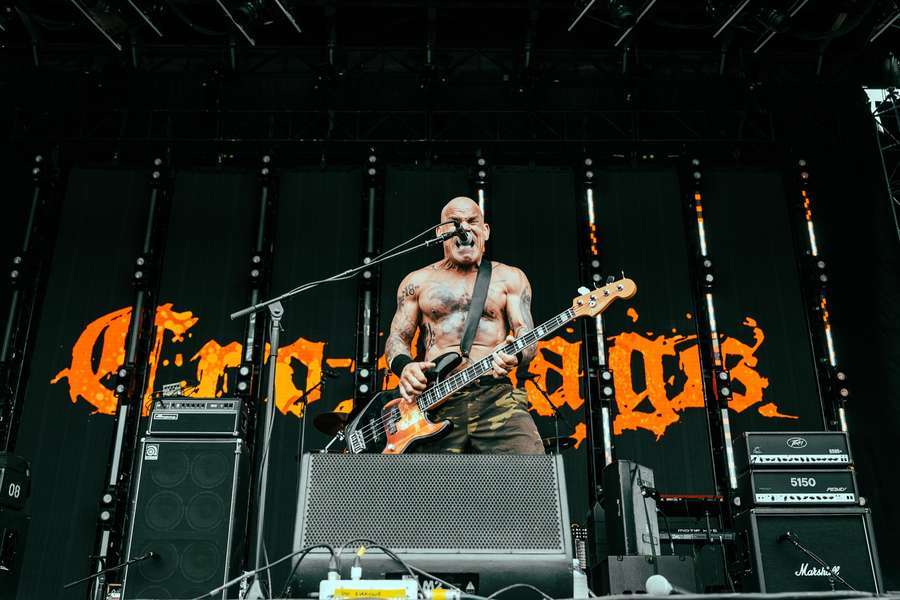
Finally, a question that has come up since we started seeing the first trailers a while ago: do you really run with the bass regularly? If so, is it a training routine of your own creation? I ask also because a Rickenbacker bass is not exactly a light instrument…
I actually started doing that after my back surgery. I had lost use of my hand and was trying to teach my hand how to play again and I knew that because of the way I move around on stage and sing, I really push myself physically, that it would require more than just getting my hand back in shape. I had to get my hand back and my cardio and my endurance, so I started jogging while practicing. It helped me get back up to where I needed to be to perform at the level I do. I don’t do it regularly anymore because I usually practice and exercise separately. But it helped get me back in time for the tours I had booked at the time, and apparently it inspired a few people, some friends of mine now practice guitar while on the treadmill as part of the pre tour prep work to be in shape.
f: Maurice Nunez
Castellano:
Wired For Chaos no es nostalgia: es supervivencia
Harley Flanagan, directo sobre infancia, archivo y cómo se sigue adelante.
Crecí con Cro-Mags, en una época en la que había que ir a la caza de historias en revistas y fanzines, mucho antes de que las redes sociales convirtieran todo en contenido. Ver Harley Flanagan: Wired for Chaos fue como volver a leer el libro: en cuanto empieza, no te suelta.
Para quienes llevamos años siguiendo a Harley Flanagan, el titular no es ninguna novedad: tu vida siempre ha sonado más grande que la vida. Lo que hace la película es desmontar el mito y dejar el coste al descubierto: el daño temprano, la rabia, la supervivencia y la disciplina que hace falta para seguir. Construida a partir de un proceso agotador —más de 100 horas de entrevistas y un archivo enorme, convertido en un único relato por Rex Miller— no es solo un documental: es un registro de cuentas.
Esta conversación no va de nostalgia. Va de lo que recuerdas, de lo que te niegas a revisitar, de lo que cambió, de lo que no… y de por qué la historia sigue avanzando.
¿Estás completamente satisfecho con el resultado?
Creo que hicieron un buen trabajo. Es muy difícil encajar más de 50 años en una hora y pico, sobre todo cuando has tenido una vida como la mía. Ya estoy en la siguiente fase y en el siguiente capítulo de mi vida. Así que la historia se sigue contando, pero sí: creo que hicieron un buen trabajo.
Cuéntanos un poco sobre el proceso. ¿Cómo y cuándo surgió la idea? Mi sensación es que es una especie de continuación o ampliación del libro, pero mucho más introspectiva y personal. Supongo que, al ser un formato distinto, el resultado se siente así. Aunque también imagino que es más duro verbalizar ciertas cosas, situaciones de tu infancia, sentimientos, etc., especialmente delante de una cámara. ¿Recuerdas qué momentos o temas fueron los más difíciles de abordar? En ese sentido, ¿te arrepientes de algo de lo que has compartido o crees que te has dejado cosas sin decir?
Tuve poco que ver con el proceso; ni siquiera fue idea mía. Mi mujer, que editó el libro, fue la que se empeñó en que debía ser una película. Ella fue una de las productoras. Una cosa llevó a la otra y al final conectamos con el director Rex Miller. Fue un proceso largo: más de 100 horas de entrevistas, muchas de las cuales ni siquiera entraron en la película. Más de 600 piezas de material de archivo y fotografías. Ni siquiera la vi hasta que estuvo terminada. Yo solo estuve presente en mis entrevistas y un par de veces que entré mientras estaban haciendo otras, lo que acabó convirtiéndose en conversaciones, y partes de eso terminaron en la película.
En Wired For Chaos yo me quedé con un mensaje de esperanza: seguir adelante e intentar dejar atrás tus demonios. ¿Lo entendí bien?
No me acuerdo; escribí el libro y no miré atrás. Ni siquiera lo leí. Quiero decir, sería terrible si todavía estuviera en el mismo sitio. En cuanto a lo que tú sacaste de la película, creo que captaste el mensaje.
Aparte de tu mujer y tu familia, ¿has buscado ayuda profesional para superar cosas del pasado que eran demasiado pesadas? ¿Crees que hablar de esto sigue siendo tabú hoy en día?
Sí. ¿Que si sigue siendo tabú? Me da igual. No es mi problema. Sea cual sea el tema, si quieres un buen consejo, vas a alguien que tenga conocimiento sobre el asunto y buenas credenciales.
La cantidad de material gráfico increíble que aparece en el documental es impresionante. Aproximadamente, ¿qué porcentaje de ese material proviene de tu archivo personal?
Yo tenía mucho, pero no todo. Tuvimos archivistas geniales que encontraron un montón de metraje increíble que yo nunca había visto y ni sabía que existía.
Mirando atrás, ¿crees que tu impacto en el punk —y en la música en general— habría sido el mismo si no hubieras vivido todo eso tan joven?
Lo dudo, pero quién sabe.
Durante el documental te vemos entrenando en algunas escenas. Por lo que cuentas, el deporte —en particular el jiu-jitsu— marcó un punto de inflexión en un momento dado y sigue siendo una parte importante de tu vida, tanto física como mentalmente. ¿Cómo lleva tu cuello esas giras tan intensas en las que has estado metido últimamente? ¿Haces algún tipo de calentamiento antes y estiramientos después, o sigues alguna rutina especial para llevarlo mejor?
Entreno todos los días. Sigo haciendo mucho jiu-jitsu, boxeo y un poco de muay thai. Me gusta mantenerme activo y en forma. Tengo algunas lesiones, pero así es la vida. Tengo rutinas para la gira, para antes del show, para casa, para mantenimiento, y a veces me paso y me exijo de más simplemente porque me gusta.
Por último, una pregunta que ha salido desde que empezamos a ver los primeros tráilers hace tiempo: ¿de verdad sueles correr con el bajo? Si es así, ¿es una rutina de entrenamiento inventada por ti? Lo pregunto también porque un bajo Rickenbacker no es precisamente un instrumento ligero…
Empecé a hacerlo después de mi operación de espalda. Había perdido el uso de la mano y estaba intentando enseñarle a mi mano a tocar otra vez. Y sabía que, por cómo me muevo en el escenario y canto, me exijo mucho físicamente; eso iba a requerir más que recuperar la mano. Tenía que recuperar la mano, y también el cardio y la resistencia, así que empecé a trotar mientras practicaba. Me ayudó a volver a donde necesitaba para actuar al nivel al que lo hago. Ya no lo hago con regularidad porque normalmente practico y entreno por separado. Pero me ayudó a llegar a tiempo para las giras que tenía cerradas entonces y, por lo visto, inspiró a unas cuantas personas: algunos amigos míos ahora practican la guitarra en la cinta como parte de la preparación previa a las giras para ponerse en forma.
f: Laura Lee Flanagan

album cover: John Conn
f: Kim Graf
f: Anon
f: Bruce Rhodes