Tom Stern on Capturing the Beautiful Chaos of Butthole Surfers
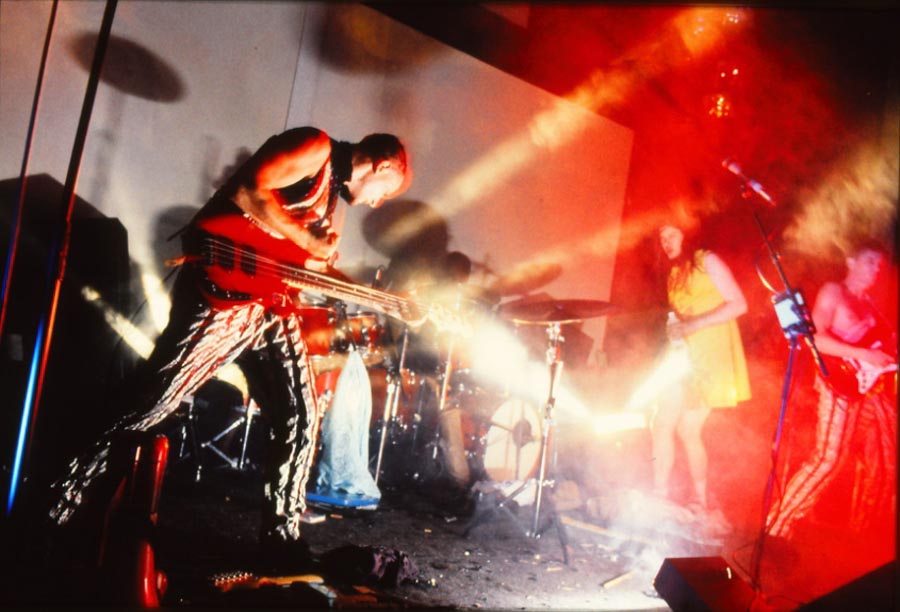
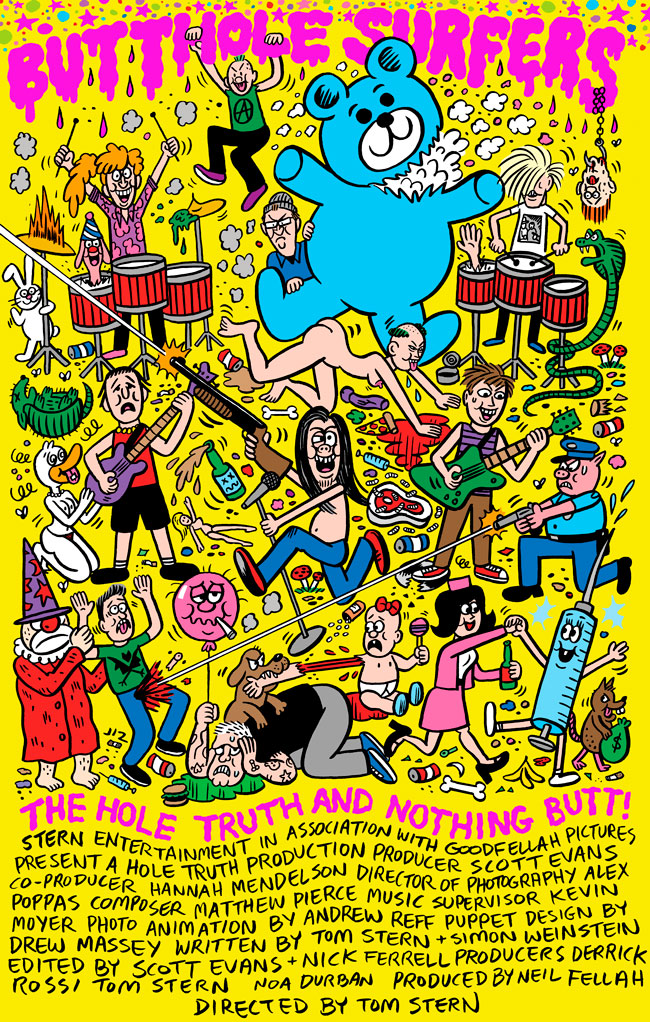
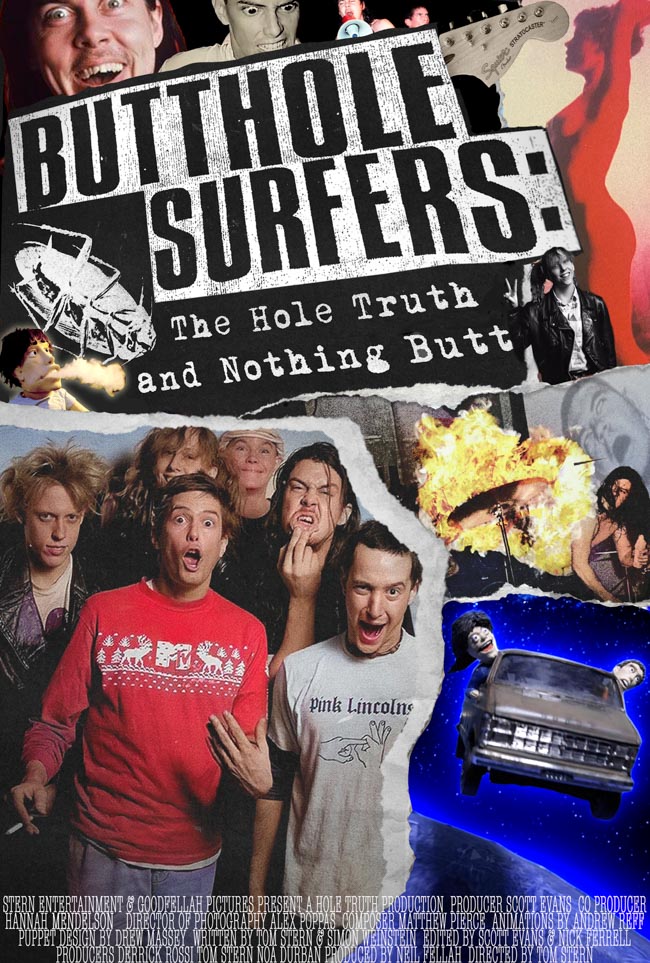
In The Hole Truth, Tom Stern approaches the Butthole Surfers from a place few filmmakers could access: inside their world, with the trust, discomfort and responsibility that such closeness implies. His film is not a conventional music documentary, nor does it try to domesticate a band that built its identity on chaos, provocation, humour and sensory overload. Instead, Stern looks for a cinematic language capable of reflecting the group’s abrasive energy: archive footage as texture, animation, puppetry, collage and a deliberately rough-edged DIY spirit that echoes the band’s own underground origins.
The conversation moves through friendship, memory, narrative structure, comedy, violence, nostalgia and the uneasy passage from underground culture into the mainstream. It also reflects on what the Butthole Surfers can mean today, in a digital present far removed from the physical, communal intensity of their live shows. For Stern, revisiting the band is not simply an exercise in looking back. It is a way of asking what remains possible when art rejects comfort, good taste and market logic, and when a film tries to preserve the shock of something that was never meant to be contained.
Your relationship with the Butthole Surfers comes from inside their world, not from a distance. How does that shift your gaze when you turn them into a film?
Yes. Because I am friends with the band and have known them a long time, there is a trust between us, and that helps, because they know I understand them and am not going to misrepresent them for some nefarious purpose. But on the other hand, the friendship makes it problematic in some ways for me as a documentarian, because it makes it more uncomfortable for me to ask hard questions that may hurt their feelings. For example, pushing Gibby to talk about the painful subjects of his past, like drug addiction and difficult personal relationships, was awkward for me. But I just had to summon the courage to forge ahead and ask the hard questions, and you can see in the film a few times when you hear me ask a hard question and you can sense the tension between Gibby and me, which is uncomfortable but also dramatically interesting. Gibby is a notoriously difficult interview subject, as he tends to deflect with comedic or oblique answers and is really resistant to being sincere and emotionally vulnerable. But I had time and determination on my side. I knew I would be very patient and just keep interviewing him over and over until I got the authentic and illuminating responses I needed.
There’s something fundamentally anti-narrative about the band. How do you build a film without imposing a structure they never had?
I struggled with the narrative structure for a long time. When I first started interviewing Gibby, he kept asking me what the structure would be, and I could not give him an answer, because I felt the structure would be dictated by the material after I shot it. But at the same time, as a filmmaker, I was always turning it over in my head and thinking I should go for a non-traditional, non-chronological structure, for the very reason that you pose in this question. Ultimately, though, as we edited the film, the basic chronology became the best way to tell the story, so I let go of my artistic pretence and submitted to the same truth we all must submit to: time. Basic chronology is the natural form of narratives. We understand stories as having a beginning, middle and end. Because that is how humans live their lives. We are born, we grow up, and ultimately we die, in chronological order. And there is enough surrealism and absurdity and chaos in the film’s subject matter and editing, on a granular level, that my worries about a chronological structure being too simple and traditional fell away.

tom stern
The film feels less like documentation and more like an experience. Were you thinking of it as something closer to a live show than a traditional documentary?
Well, yes, my ultimate goal was to recreate something like the overwhelming sensory experience that was a Butthole Surfers concert. As much as I love their records, the most amazing thing about the band was their live shows. They pushed performance further into a different realm than any band ever. The concerts were transcendent, like a rite of passage where you were transported into another state of consciousness. But while this was my goal, I understood it was probably not completely possible in a film. There is something about being in a very loud nightclub, pressed into a sweaty, throbbing mass of humanity that is reacting in real time to the spontaneous and overpowering energy of that band that is impossible to recreate in the medium of film. However, I will say that after he saw the finished film, Paul Leary told me that while he never thought it was really possible, he thought I actually did pull it off. I do not necessarily agree with him, but that is the most flattering and wonderful thing I could ever hope to hear.
Here, archive doesn’t function as evidence but as raw material. How did you rethink its role within the film?
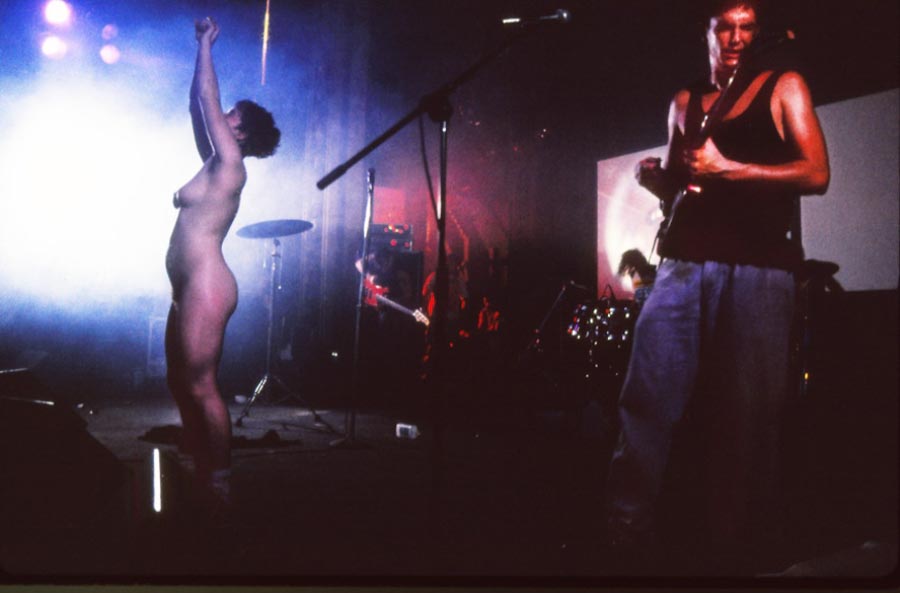
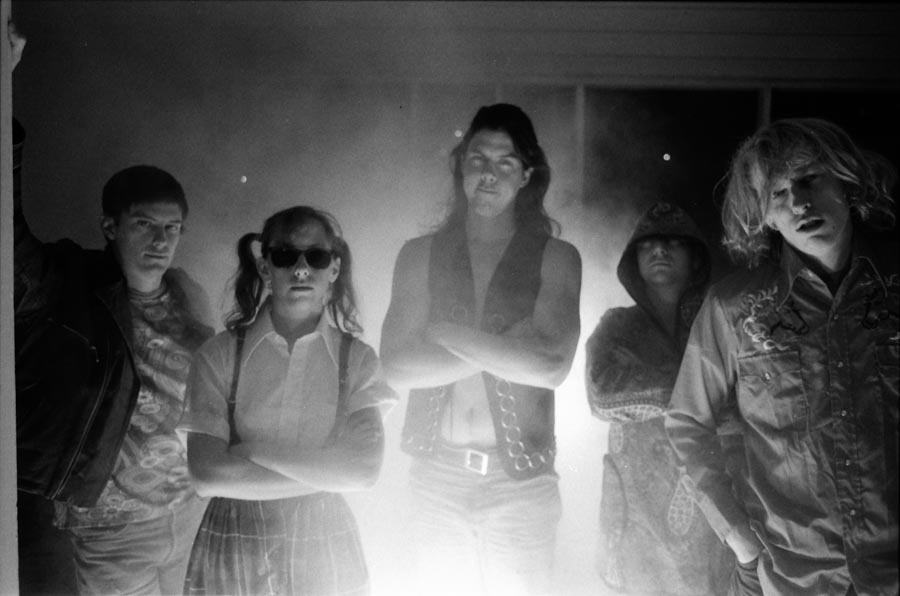
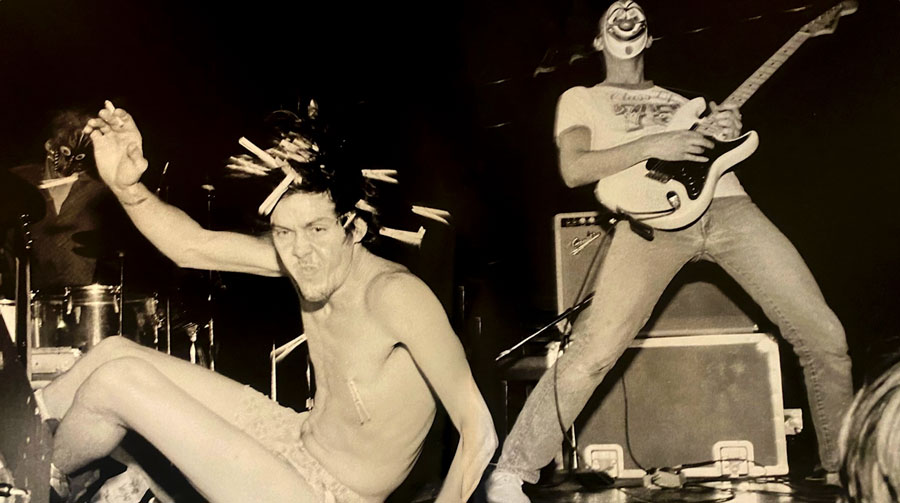
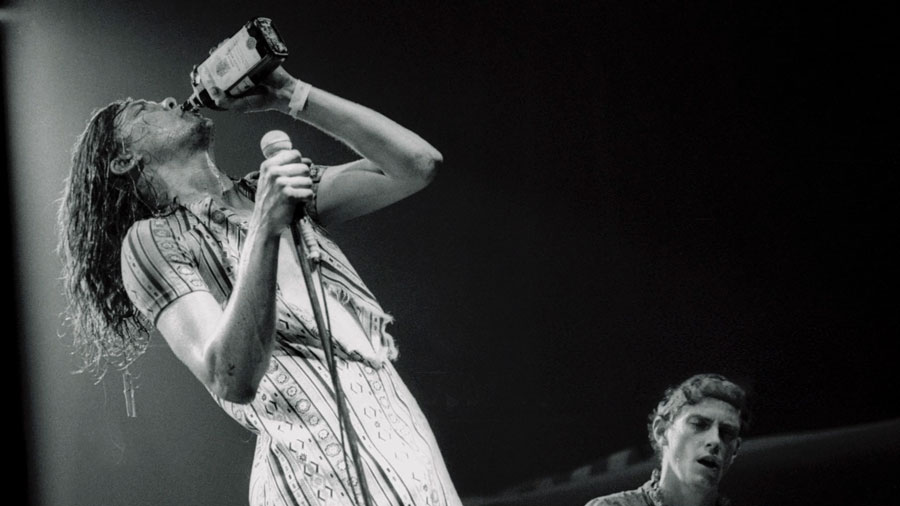
We were lucky to find some rare archival performance footage of the band, including some shot by one of their college friends named Eddie Harden, who captured their very early rehearsals from 1981, when they were in their early twenties. And then there was great footage of the band’s performance in Rotterdam on their first European tour in 1985. And also the infamous Danceteria show in New York City in 1986, including the simulated live sex performance art between Gibby and the dancer Kathleen Lynch. I always thought it would be possible to cut to the performance footage abruptly and use it as texture in the film, because it fits the Butthole Surfers’ aesthetic, which frequently involves fast stops and starts and abrupt rhythmic breaks, like in the songs “Moving to Florida” and “Lady Sniff”. So I thought it would be possible to mimic this kind of staccato rhythm in the film by just cutting to short bursts of performance footage, which is also a nice way to inject energy and pacing.
The visual language -animation, puppetry, collage- taps into a strong DIY energy. Where do you position craft versus industry in your filmmaking?
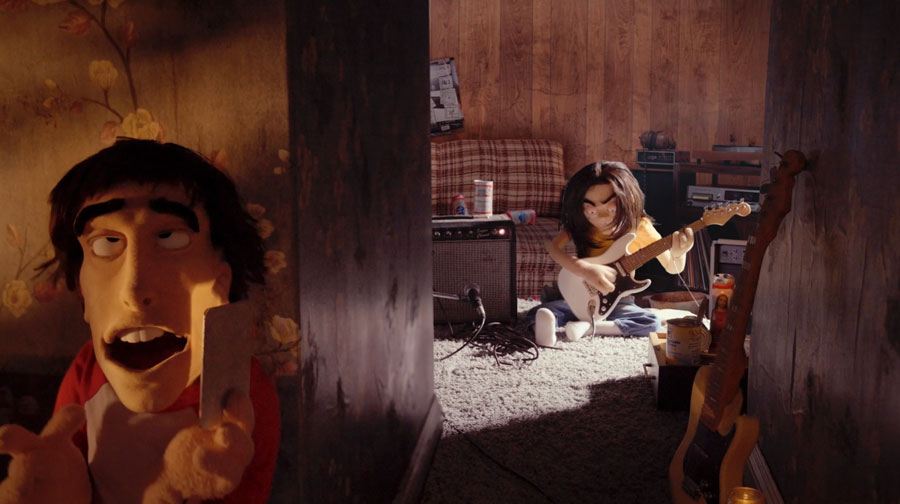
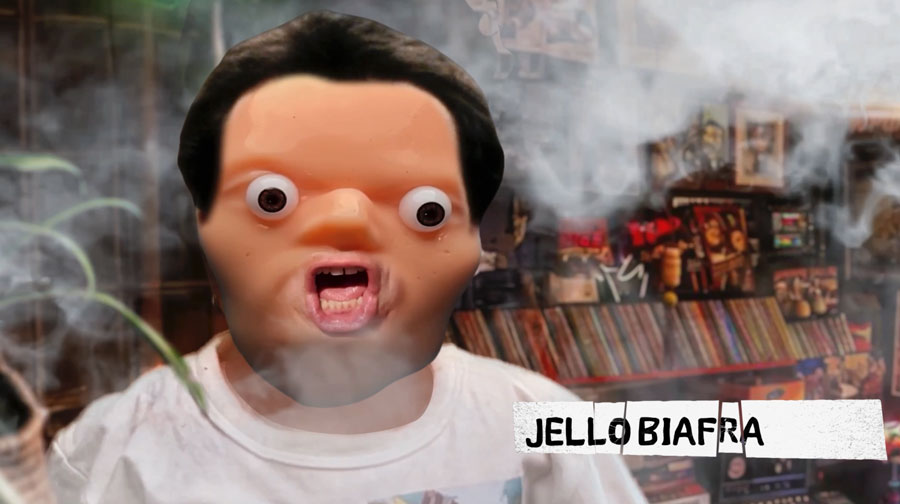
I have always been, for better or worse, a very DIY filmmaker, because my visual ambitions are often beyond my budget. So I end up building them myself. I had amazing talents helping me in this film, like the puppet designer Drew Massey and the animator Andrew Reff, but I also did a lot of the more experimental DIY visual effects myself, like making a puppet of Jello Biafra out of actual Jell-O, which turned out to have a very cool psychedelic look when I shook it and filmed it jiggling in slow motion. And I think the rough-around-the-edges DIY nature of some of the other visuals, like the miniature vans driving on a papier-mâché earth covered in old road maps, suited the punk psychedelic vibe of the band.

The band starts in the margins but eventually leaks into the mainstream. Were you interested in that moment when something radical begins to get absorbed?
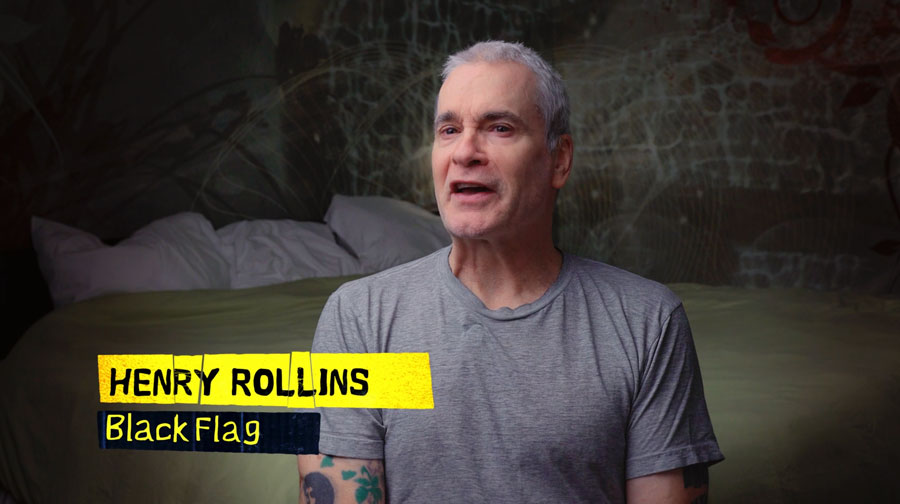
I am very interested in the way the underground music scene in the 1980s ultimately led to a historic cultural revolution when Nirvana went mainstream. Nirvana was very much following in the footsteps of the Buttholes, and I have conflicting feelings about it because it was such a big part of my life back then. It was a very exciting time to be going to those shows by amazing bands like Minutemen, The Meat Puppets, The Butthole Surfers, and then later, I was very excited when Nirvana came onto that scene. So when they broke into the mainstream in the early 1990s, it was thrilling, but also there was a sense of loss around it, because it went from this intimate community of passionate fans to the giant machinery of record companies, the publicity machine and mass consumer culture, which is in direct tension with the DIY aesthetic that made those bands who they were. It changed something fundamentally, and in many ways it was a negative change. The DIY aspect of those 1980s underground bands was essential to what made them exciting, and as Jeff Pinkus says in the movie, it had a destructive effect on Gibby especially. Because when he had to essentially manage the band himself, Gibby was very busy and had to be responsible for all the logistics and management tasks of booking shows, studio time and all that, which kept Gibby focused and kept his feet on the ground to some extent. Whereas when they signed with Capitol Records, other people started doing all that for him, and it freed him up to indulge in more self-destructive behaviour. Gibby himself expressed regret in some of the interviews that are actually not in the film, where he says he thinks they were not meant to be a major-label band and would have been better off starting their own independent record label.
There’s a kind of aesthetic violence in their work that never feels empty. How do you translate that into film without it becoming pure shock value?
They were all about harsh juxtapositions between the sublime and the horrific. Like Dave Grohl describes in the film, the background footage behind the band could be beautiful underwater photography of colourful fish, shot by Jacques Cousteau, and then it abruptly cuts to genital reconstruction surgery. It was shocking and had a visceral impact that very few rock and roll shows ever approached. As far as the question of whether these moments in the film are empty shock value or true to the spirit of the band, it became just a gut-feeling judgement call on any given edit point in the film, and a matter of taste, which I felt pretty secure about making, since their aesthetic is so deeply embedded in my personal artistic sensibility. There is a balance that became much easier to figure out based on where it comes in the context of the film. For example, after the very scatological puppet scene that features diarrhoea in a Times Square peep show, I did not want to feature more faecal matter for a while, lest it leave a bad taste in the audience’s mouth, so to speak.
The film resists organising chaos into something comfortable. Were you wary of making it too “readable”?
Yes, I was definitely conscious of not wanting to make it too normal. And I encouraged my editors and everyone on the team to keep it weird. Because that is essential to the Butthole Surfers’ aesthetic. We did not want to make a normal movie about a band that was, in many ways, a total rejection of normality.
Their humour is abrasive, almost confrontational. How do you work with a form of comedy that does not seek approval but friction?
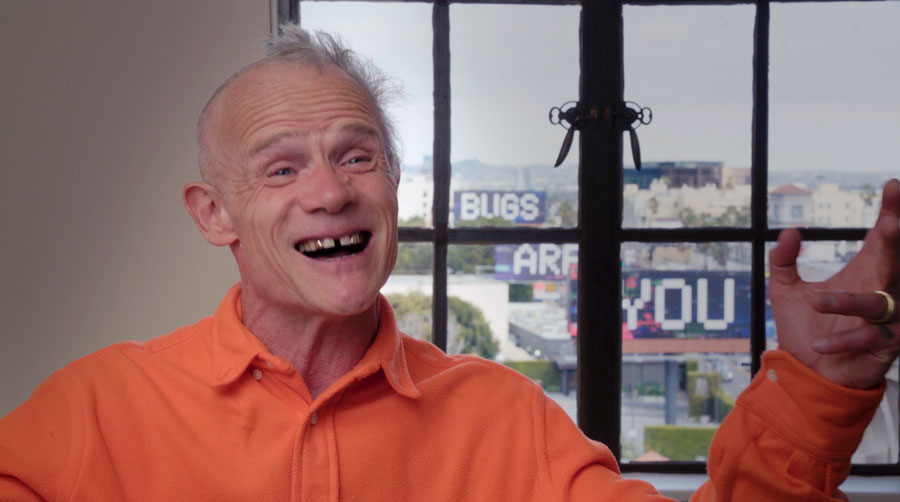
Well, this comes very naturally to me, because I grew up heavily influenced by the transgressive comedy of the early 1970s, like National Lampoon, Monty Python, John Waters and the great underground cartoonist R. Crumb. So my comedic sensibility has always been about transgressing bourgeois good taste. Even though there is an anti-traditional spirit to that, it is ironically part of a tradition that goes back to early twentieth-century European art movements like Surrealism and Dada. And there is also a long tradition in America of comedy that is abrasive and rude, like the Marx Brothers and Bugs Bunny. That is very much a part of my own sensibility. So the Butthole Surfers are part of that continuity in many ways. After all, they studied art in college and were definitely heavily influenced by Dada.
Telling this story means dealing with conflicting memories and perspectives. How do you decide which version of events stays?
It is amazing how unreliable the human memory is and how we create false memories of events over time. And yet they feel like real memories. So knowing that, I felt the best way to handle it was to present conflicting stories from different people, like Kurosawa did in Rashomon, and let the audience decide what the truth is.

There’s no clean nostalgia here. How did you avoid slipping into that easy “better times” narrative?
When talking about the peak BHS shows of the late 1980s, many interview subjects uttered some variation of the dreaded cliché “you had to be there”. It is basically a true statement. It is hard not to be nostalgic for those incredible experiences, which really do stand out in the life memories of those who were there. But I was sensitive to how annoying that phrase is to people who were not there, so I did not include it in the film. It sort of goes without saying, and I did not want the film to be annoying to younger people who were born too late or to folks who were geographically disadvantaged. I wanted the film to welcome people into the world of the Butthole Surfers, so I avoided that kind of “hipper and luckier than thou” sentiment.
Your background moves between comedy, television and underground culture. What parts of that language fed into this film — and what did you have to leave behind?
My background in comedy was a big advantage in getting the film right, because comedy is a major element of the Buttholes’ modus operandi. Again, it is one of the key things about their worldview that appealed to me, so to be able to tell the story right it had to include comedy. The surprise to people is the last third of the film, where the comedy fades and an emotionally tender, sincere tone takes over.

The band operated in a physical ecosystem, bodies, noise, shared space. What does it mean to revisit that from a digital present?
This is something I think about a lot. Our modern world of digital isolation weighs on my soul, especially as a parent. The Butthole Surfers story is in many ways an antidote for what ails us in this moment. They were all about a communal experience where people came together in a very physical, very real way, and it felt so direct, so in your face, and so unpredictable. It really felt like anything could happen at those shows, and it often did. It feels like we increasingly live in a depressing simulacrum of real life, experienced by craning our necks down while we stare at a three-inch screen. The BHS shows were the exact opposite of that: the sensory overload was all around you, and the sound was literally inside you.
There’s a performative layer to how the band constructed themselves. Were you more interested in deconstructing that persona or preserving it?
Both. Their stage personas had a cartoonish quality that I liked, and that is why I thought turning them into puppet caricatures felt right. In fact, I thought it would help iconify them for audiences. But of course that is only one level, and as the film goes on we start to examine them more as the nuanced, complex humans that they are.

Even the band’s name is a rejection of market logic. How possible is that kind of stance today?
Yes, their name, like other band names in the underground back then, such as Millions of Dead Cops and Dead Kennedys, was deliberately anti-commercial, which their audience, me included, appreciated. It bolstered their credibility as anti-corporate rock. These days that would still hold true, but in different ways. We are hamstrung marketing the movie on TikTok, for example, because their algorithm will not promote anything with a name that could be considered obscene. Meet the new media, same as the old media. I am sure the band Anal Cunt has to deal with this problem as well.
If someone discovers the Butthole Surfers through this film today, what do you want them to feel first: attraction, rejection, or the urge to make something of their own?
Attraction, fascination, laughter, wonder and inspiration. If the film inspires younger artists to go out and do things, take wild chances and push the envelope of creativity, then I will be very happy. And I will say that I have heard exactly that from many young audience members at screenings, so I am grateful for that.
SPANISH:
TOM STERN ANTE EL BELLO CAOS DE BUTTHOLE SURFERS
En The Hole Truth, Tom Stern se acerca a los Butthole Surfers desde un lugar al que pocos cineastas podrían acceder: desde dentro de su mundo, con la confianza, la incomodidad y la responsabilidad que implica esa cercanía. Su película no es un documental musical convencional, ni intenta domesticar a una banda que construyó su identidad sobre el caos, la provocación, el humor y la sobrecarga sensorial. En su lugar, Stern busca un lenguaje cinematográfico capaz de reflejar la energía abrasiva del grupo: material de archivo como textura, animación, marionetas, collage y un espíritu DIY deliberadamente imperfecto que conecta con los propios orígenes underground de la banda.
La conversación atraviesa la amistad, la memoria, la estructura narrativa, la comedia, la violencia, la nostalgia y el incómodo paso de la cultura underground al mainstream. También reflexiona sobre lo que los Butthole Surfers pueden significar hoy, en un presente digital muy alejado de la intensidad física y comunitaria de sus conciertos. Para Stern, volver a la banda no es simplemente un ejercicio de mirada hacia el pasado. Es una forma de preguntarse qué sigue siendo posible cuando el arte rechaza la comodidad, el buen gusto y la lógica del mercado, y cuando una película intenta conservar el impacto de algo que nunca estuvo destinado a ser contenido.
Tu relación con los Butthole Surfers nace desde dentro de su mundo, no desde la distancia. ¿Cómo cambia eso tu mirada cuando los conviertes en una película?
Sí. Como soy amigo de la banda y los conozco desde hace mucho tiempo, hay una confianza entre nosotros, y eso ayuda, porque saben que los entiendo y que no voy a tergiversarlos con ningún propósito oscuro. Pero, por otro lado, la amistad también lo hace problemático en algunos sentidos para mí como documentalista, porque me resulta más incómodo hacer preguntas difíciles que puedan herir sus sentimientos. Por ejemplo, empujar a Gibby a hablar de temas dolorosos de su pasado, como la adicción a las drogas y relaciones personales complicadas, fue incómodo para mí. Pero tuve que reunir el valor para seguir adelante y hacer las preguntas difíciles, y en la película se puede ver varias veces, cuando se me oye hacer una pregunta dura, que se percibe la tensión entre Gibby y yo, algo incómodo pero también dramáticamente interesante. Gibby es un entrevistado notoriamente difícil, ya que tiende a esquivar con respuestas cómicas u oblicuas y se resiste mucho a ser sincero y emocionalmente vulnerable. Pero yo tenía el tiempo y la determinación de mi lado. Sabía que iba a ser muy paciente y a entrevistarlo una y otra vez hasta conseguir las respuestas auténticas e iluminadoras que necesitaba.
Hay algo fundamentalmente antinarrativo en la banda. ¿Cómo se construye una película sin imponer una estructura que ellos nunca tuvieron?
Luché con la estructura narrativa durante mucho tiempo. Cuando empecé a entrevistar a Gibby, él no dejaba de preguntarme cuál sería la estructura, y yo no podía darle una respuesta, porque sentía que la estructura la dictaría el material después de rodarlo. Pero, al mismo tiempo, como cineasta, siempre le daba vueltas en la cabeza y pensaba que debía optar por una estructura no tradicional, no cronológica, precisamente por la razón que planteas en esta pregunta. Al final, sin embargo, a medida que montábamos la película, la cronología básica se convirtió en la mejor forma de contar la historia, así que dejé de lado mi pretensión artística y me sometí a la misma verdad a la que todos debemos someternos: el tiempo. La cronología básica es la forma natural de las narraciones. Entendemos las historias como algo que tiene principio, nudo y desenlace. Porque así es como los seres humanos viven sus vidas. Nacemos, crecemos y, finalmente, morimos, en orden cronológico. Y hay suficiente surrealismo, absurdo y caos en el tema de la película y en su montaje, a un nivel granular, como para que mis preocupaciones sobre que una estructura cronológica fuera demasiado simple y tradicional desaparecieran.
La película se siente menos como documentación y más como una experiencia. ¿Pensabas en ella como algo más cercano a un concierto que a un documental tradicional?
Bueno, sí, mi objetivo final era recrear algo parecido a la experiencia sensorial abrumadora que era un concierto de los Butthole Surfers. Por mucho que me gusten sus discos, lo más increíble de la banda eran sus directos. Llevaron la performance más lejos, a un terreno distinto al de cualquier otra banda. Los conciertos eran trascendentes, como un rito de paso en el que eras transportado a otro estado de conciencia. Pero, aunque ese era mi objetivo, entendía que probablemente no era del todo posible en una película. Hay algo en estar en una discoteca muy ruidosa, apretado dentro de una masa sudorosa y palpitante de humanidad que reacciona en tiempo real a la energía espontánea y arrolladora de esa banda, que es imposible recrear en el medio cinematográfico. Sin embargo, diré que después de ver la película terminada, Paul Leary me dijo que, aunque nunca pensó que fuera realmente posible, creía que yo sí lo había conseguido. No necesariamente estoy de acuerdo con él, pero es lo más halagador y maravilloso que podía esperar oír.
Aquí, el archivo no funciona como prueba, sino como materia prima. ¿Cómo replanteaste su papel dentro de la película?
Tuvimos la suerte de encontrar material de archivo poco común de actuaciones de la banda, incluido material filmado por uno de sus amigos de la universidad, Eddie Harden, que captó sus primeros ensayos de 1981, cuando ellos estaban al principio de la veintena. Y luego había un gran material de la actuación de la banda en Róterdam durante su primera gira europea en 1985. Y también el infame concierto de Danceteria en Nueva York en 1986, incluida la performance de sexo simulado en directo entre Gibby y la bailarina Kathleen Lynch. Siempre pensé que sería posible cortar de forma abrupta hacia el material de las actuaciones y usarlo como textura en la película, porque encaja con la estética de los Butthole Surfers, que a menudo implica paradas y arranques rápidos y rupturas rítmicas bruscas, como en las canciones “Moving to Florida” y “Lady Sniff”. Así que pensé que sería posible imitar ese tipo de ritmo staccato en la película simplemente cortando hacia breves estallidos de material de actuaciones, lo cual también es una buena forma de inyectar energía y ritmo.
El lenguaje visual -animación, marionetas, collage- conecta con una fuerte energía DIY. ¿Dónde sitúas la artesanía frente a la industria en tu cine?
Siempre he sido, para bien o para mal, un cineasta muy DIY, porque mis ambiciones visuales a menudo están por encima de mi presupuesto. Así que termino construyéndolas yo mismo. Tuve talentos increíbles ayudándome en esta película, como el diseñador de marionetas Drew Massey y el animador Andrew Reff, pero también hice yo mismo muchos de los efectos visuales DIY más experimentales, como fabricar una marioneta de Jello Biafra con gelatina Jell-O de verdad, que acabó teniendo un aspecto psicodélico muy chulo cuando la sacudí y la filmé temblando a cámara lenta. Y creo que la naturaleza DIY, un poco tosca en los bordes, de algunos de los otros elementos visuales, como las furgonetas en miniatura conduciendo sobre una Tierra de papel maché cubierta de viejos mapas de carretera, encajaba con la vibra punk psicodélica de la banda.
La banda empieza en los márgenes, pero acaba filtrándose en el mainstream. ¿Te interesaba ese momento en el que algo radical empieza a ser absorbido?
Me interesa mucho la forma en que la escena musical underground de los años ochenta terminó conduciendo a una revolución cultural histórica cuando Nirvana llegó al mainstream. Nirvana seguía claramente los pasos de los Buttholes, y tengo sentimientos contradictorios al respecto porque aquello fue una parte muy importante de mi vida entonces. Fue una época muy emocionante para ir a ver conciertos de bandas increíbles como Minutemen, The Meat Puppets, The Butthole Surfers, y después, más tarde, me entusiasmó mucho cuando Nirvana llegó a esa escena. Así que cuando entraron en el mainstream a principios de los noventa fue emocionante, pero también había una sensación de pérdida alrededor de ello, porque pasó de ser una comunidad íntima de fans apasionados a la gigantesca maquinaria de las discográficas, la máquina publicitaria y la cultura de consumo masivo, lo cual está en tensión directa con la estética DIY que hizo de esas bandas lo que eran. Cambió algo de forma fundamental, y en muchos sentidos fue un cambio negativo. El aspecto DIY de esas bandas underground de los ochenta era esencial para lo que las hacía emocionantes, y como dice Jeff Pinkus en la película, tuvo un efecto destructivo especialmente en Gibby. Porque cuando él tenía que gestionar esencialmente la banda por sí mismo, Gibby estaba muy ocupado y tenía que responsabilizarse de toda la logística y las tareas de gestión: contratar conciertos, tiempo de estudio y todo eso, lo que mantenía a Gibby centrado y con los pies en la tierra hasta cierto punto. Mientras que, cuando firmaron con Capitol Records, otras personas empezaron a hacer todo eso por él, y eso lo liberó para entregarse a comportamientos más autodestructivos. El propio Gibby expresó arrepentimiento en algunas entrevistas que en realidad no están en la película, donde dice que cree que ellos no estaban destinados a ser una banda de multinacional y que les habría ido mejor creando su propio sello discográfico independiente.
Hay una especie de violencia estética en su obra que nunca se siente vacía. ¿Cómo se traduce eso al cine sin que se convierta en puro valor de impacto?
Todo en ellos tenía que ver con yuxtaposiciones duras entre lo sublime y lo horrible. Como describe Dave Grohl en la película, las imágenes de fondo detrás de la banda podían ser una bella fotografía submarina de peces de colores, filmada por Jacques Cousteau, y de repente cortaban a una cirugía de reconstrucción genital. Era impactante y tenía un efecto visceral al que muy pocos conciertos de rock and roll se han acercado jamás. En cuanto a la cuestión de si esos momentos en la película son puro valor de impacto o son fieles al espíritu de la banda, se convirtió simplemente en una decisión instintiva en cada punto de montaje de la película, y en una cuestión de gusto, algo sobre lo que me sentía bastante seguro, ya que su estética está profundamente incrustada en mi sensibilidad artística personal. Hay un equilibrio que se volvió mucho más fácil de entender según el lugar que ocupa dentro del contexto de la película. Por ejemplo, después de la escena de marionetas muy escatológica que incluye diarrea en un peep show de Times Square, no quería incluir más materia fecal durante un rato, no fuera a dejar mal sabor de boca al público, por así decirlo.
La película se resiste a organizar el caos en algo cómodo. ¿Te preocupaba hacerla demasiado “legible”?
Sí, era definitivamente consciente de no querer hacerla demasiado normal. Y animé a mis montadores y a todo el equipo a mantenerla rara. Porque eso es esencial para la estética de los Butthole Surfers. No queríamos hacer una película normal sobre una banda que era, en muchos sentidos, un rechazo total de la normalidad.
Su humor es abrasivo, casi confrontacional. ¿Cómo se trabaja con una forma de comedia que no busca aprobación, sino fricción?
Bueno, esto me sale de forma muy natural, porque crecí muy influido por la comedia transgresora de principios de los setenta, como National Lampoon, Monty Python, John Waters y el gran dibujante underground R. Crumb. Así que mi sensibilidad cómica siempre ha tenido que ver con transgredir el buen gusto burgués. Aunque hay un espíritu antitradicional en eso, irónicamente forma parte de una tradición que se remonta a movimientos artísticos europeos de principios del siglo XX como el surrealismo y el dadaísmo. Y también hay una larga tradición en Estados Unidos de comedia abrasiva y grosera, como los hermanos Marx y Bugs Bunny. Eso forma parte muy claramente de mi propia sensibilidad. Así que los Butthole Surfers forman parte de esa continuidad de muchas maneras. Al fin y al cabo, estudiaron arte en la universidad y sin duda estuvieron muy influidos por el dadaísmo.
Contar esta historia implica lidiar con recuerdos y perspectivas contradictorias. ¿Cómo decides qué versión de los hechos permanece?
Es increíble lo poco fiable que es la memoria humana y cómo creamos falsos recuerdos de los acontecimientos con el tiempo. Y, aun así, se sienten como recuerdos reales. Así que, sabiendo eso, sentí que la mejor forma de manejarlo era presentar historias contradictorias de distintas personas, como hizo Kurosawa en Rashomon, y dejar que el público decida cuál es la verdad.
Aquí no hay una nostalgia limpia. ¿Cómo evitaste caer en ese relato fácil de “tiempos mejores”?
Cuando se hablaba de los conciertos de BHS en su momento álgido, a finales de los ochenta, muchas de las personas entrevistadas pronunciaban alguna variación del temido cliché “tenías que haber estado allí”. Básicamente es una afirmación verdadera. Es difícil no sentir nostalgia por esas experiencias increíbles, que realmente destacan en los recuerdos vitales de quienes estuvieron allí. Pero era consciente de lo molesta que resulta esa frase para quienes no estuvieron, así que no la incluí en la película. Es algo que de algún modo se sobreentiende, y no quería que la película resultara irritante para la gente más joven que nació demasiado tarde ni para quienes estuvieron en desventaja geográfica. Quería que la película recibiera a la gente dentro del mundo de los Butthole Surfers, así que evité ese tipo de sentimiento de “más guay y con más suerte que tú”.
Tu trayectoria se mueve entre la comedia, la televisión y la cultura underground. ¿Qué partes de ese lenguaje alimentaron esta película y qué tuviste que dejar atrás?
Mi trayectoria en la comedia fue una gran ventaja para acertar con la película, porque la comedia es un elemento fundamental del modus operandi de los Buttholes. De nuevo, es una de las cosas clave de su visión del mundo que me atraía, así que para contar bien la historia tenía que incluir comedia. Lo que sorprende a la gente es el último tercio de la película, cuando la comedia se desvanece y toma el relevo un tono emocionalmente tierno y sincero.
La banda funcionaba dentro de un ecosistema físico: cuerpos, ruido, espacio compartido. ¿Qué significa revisitar eso desde un presente digital?
Esto es algo en lo que pienso mucho. Nuestro mundo moderno de aislamiento digital me pesa en el alma, especialmente como padre. La historia de los Butthole Surfers es, en muchos sentidos, un antídoto para lo que nos aqueja en este momento. Ellos tenían que ver con una experiencia comunitaria en la que la gente se reunía de una forma muy física, muy real, y se sentía algo tan directo, tan en tu cara y tan impredecible. Realmente parecía que cualquier cosa podía pasar en esos conciertos, y a menudo pasaba. Siento que vivimos cada vez más en un simulacro deprimente de la vida real, experimentado inclinando el cuello hacia abajo mientras miramos una pantalla de tres pulgadas. Los conciertos de BHS eran exactamente lo contrario de eso: la sobrecarga sensorial estaba a tu alrededor, y el sonido estaba literalmente dentro de ti.
Hay una capa performativa en la forma en que la banda se construyó a sí misma. ¿Te interesaba más deconstruir esa personalidad o preservarla?
Ambas cosas. Sus personajes escénicos tenían una cualidad caricaturesca que me gustaba, y por eso pensé que convertirlos en caricaturas de marioneta tenía sentido. De hecho, pensé que ayudaría a iconificarlos para el público. Pero, por supuesto, eso es solo un nivel, y a medida que avanza la película empezamos a examinarlos más como los seres humanos matizados y complejos que son.
Incluso el nombre de la banda es un rechazo de la lógica del mercado. ¿Hasta qué punto es posible ese tipo de postura hoy?
Sí, su nombre, como otros nombres de bandas del underground de entonces, como Millions of Dead Cops y Dead Kennedys, era deliberadamente anticomercial, algo que su público, yo incluido, apreciaba. Reforzaba su credibilidad como rock anticorporativo. Hoy eso seguiría siendo cierto, pero de formas distintas. Nos vemos limitados al promocionar la película en TikTok, por ejemplo, porque su algoritmo no promociona nada con un nombre que pueda considerarse obsceno. Conoce a los nuevos medios: igual que los viejos medios. Estoy seguro de que la banda Anal Cunt también tiene que lidiar con este problema.
Si alguien descubre a los Butthole Surfers hoy a través de esta película, ¿qué quieres que sienta primero: atracción, rechazo o el impulso de crear algo propio?
Atracción, fascinación, risa, asombro e inspiración. Si la película inspira a artistas jóvenes a salir y hacer cosas, asumir riesgos salvajes y llevar la creatividad más allá de sus límites, entonces me sentiré muy feliz. Y diré que he escuchado exactamente eso de muchos espectadores jóvenes en proyecciones, así que estoy agradecido por ello.